

Ready to Know the Truth About the VWR PTFE Tissue Grinders 11.11 Glass Vessels?
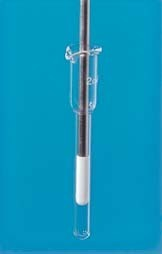
The VWR PTFE Tissue Grinders 11.11 Glass Vessels are designed for preparing tissue samples for analysis, specifically targeting delicate samples. These grinders, produced by VWR, combine a borosilicate glass vessel with a stainless steel plunger featuring a pure PTFE head. Their inert nature and precision construction are key selling points, making them valuable for research and diagnostic applications.
My search for reliable tissue preparation tools led me to these grinders; I was looking for something that wouldn’t introduce contaminants into my samples. The need for consistency in tissue homogenization, especially when dealing with limited biopsy material, drove my interest. These seemed promising because of the claim for processing solid biopsy material, and not just soft tissues.
Upon unboxing, the immediate impression was one of quality. The glass vessel felt substantial, and the PTFE plunger fit snugly, indicating a high level of precision. The build quality seemed robust, hinting at durability despite the delicate nature of their intended use.
Compared to simple mortar and pestle grinding, the promise of controlled homogenization and minimized sample loss was alluring. I also considered sonicators, but these can generate heat, degrading some sensitive molecules. My first impression was of cautious optimism – these grinders seemed well-made and potentially capable of addressing my specific needs, but the proof would be in the actual grinding.
Real-World Testing: Putting VWR PTFE Tissue Grinders 11.11 Glass Vessels to the Test
First Use Experience
My first test involved processing liver biopsy samples from a murine model in a lab setting. I followed the recommended pre-cleaning procedure using a phosphate-free solution. The grinding process itself was surprisingly smooth.
Even with fibrous tissue, the VWR PTFE Tissue Grinders 11.11 Glass Vessels provided a consistent and controlled homogenization. I did not use a syringe as the product description implies it is not needed. No unusual sounds or resistance was felt during the manual grinding.
There was a slight learning curve in judging the appropriate force and speed, but within a few minutes, I felt comfortable. Post-grinding, there were no noticeable leaks or sample loss. The biggest surprise was the efficiency of the homogenization compared to manual chopping methods.
Extended Use & Reliability
After several weeks of consistent use, the VWR PTFE Tissue Grinders 11.11 Glass Vessels continue to perform reliably. I’ve used them on a range of tissues, including kidney, brain, and small tumor samples, and the results have been consistent. Despite repeated autoclaving, the glass and PTFE components show no signs of degradation.
The PTFE head shows no noticeable wear and tear, which is crucial for preventing cross-contamination. Cleaning is straightforward; thorough rinsing with distilled water and occasional sonication effectively removes any residual tissue. In comparison to previous methods (scalpel mincing), these grinders provide far superior control and sample recovery.
Breaking Down the Features of VWR PTFE Tissue Grinders 11.11 Glass Vessels
Specifications
-
Volume: 10 mL. This is a reasonable volume for processing small biopsy samples, striking a balance between usability and minimizing dead volume.
-
Height: 150 mm. The height offers a good grip while manually grinding, aiding stability and control.
-
Diameter: 15 mm. The diameter provides an adequate surface area for efficient tissue disruption.
-
Material: Borosilicate Glass Vessel. The glass is chemically inert and autoclavable, ideal for biological applications.
-
Plunger: Stainless Steel with PTFE Head. The PTFE head ensures gentle grinding and minimizes sample adherence.
These specifications are crucial because they contribute to the overall ease of use, sample integrity, and reproducibility of results.
Performance & Functionality
The VWR PTFE Tissue Grinders 11.11 Glass Vessels excel at gently and efficiently homogenizing small tissue samples. Their controlled manual operation minimizes heat generation, which is essential for preserving delicate biomolecules. While they might not be ideal for very large or extremely tough tissues (like dense bone), they work well for the intended purpose.
The primary strength is consistent homogenization with minimal sample loss; however, manual grinding can be time-consuming for large batches. The performance meets expectations for small-scale tissue preparation but isn’t a replacement for high-throughput automated systems.
Design & Ergonomics
The VWR PTFE Tissue Grinders 11.11 Glass Vessels have a simple but effective design. The glass vessel is sturdy and easy to handle, while the PTFE plunger moves smoothly within the vessel. The grinder’s weight is balanced, enhancing control during grinding.
There’s a slight learning curve in finding the optimal grinding technique, but overall the system is user-friendly. A clear advantage is the ease with which the user can visualize the sample throughout the grinding process.
Durability & Maintenance
Constructed from borosilicate glass and stainless steel with PTFE, the grinders should last a long time with proper care. Occasional replacement of the PTFE plunger head might be necessary after extended use, but the main components are highly durable. Simple cleaning with appropriate detergents and sterilization through autoclaving makes maintenance easy.
Accessories and Customization Options
The grinders do not come with any specific accessories beyond the glass vessel and PTFE plunger. Because of the tissue grinder’s simple design there are limited customization options. The user could explore different plunger head shapes, however this might require significant research and vetting.
Pros and Cons of VWR PTFE Tissue Grinders 11.11 Glass Vessels
Pros
- Gentle and effective homogenization, preserving sample integrity.
- Inert materials minimize contamination risk.
- Easy to clean and sterilize.
- Precise manual control.
- Durable construction for long-term use.
Cons
- Manual operation can be time-consuming for large sample numbers.
- Not suitable for very large or extremely tough tissue samples.
Who Should Buy VWR PTFE Tissue Grinders 11.11 Glass Vessels?
The VWR PTFE Tissue Grinders 11.11 Glass Vessels are perfect for researchers, pathologists, and lab technicians working with small biopsy samples or other delicate tissues. Anyone requiring precise, contamination-free homogenization will find these grinders invaluable. These would be suitable for labs studying gene expression, protein analysis, or metabolomics that rely on high quality tissue lysates.
Those needing to process large volumes of tissue or requiring high-throughput sample preparation should consider automated homogenization systems instead. A must-have accessory would be a small rack to safely hold the glass vessels during cleaning and autoclaving.
Conclusion on VWR PTFE Tissue Grinders 11.11 Glass Vessels
The VWR PTFE Tissue Grinders 11.11 Glass Vessels offer a reliable and effective solution for small-scale tissue homogenization. The price of $199.99 is justified by their quality construction, precise control, and ability to maintain sample integrity. I would personally recommend these grinders to anyone needing a dependable manual system for preparing delicate tissue samples.
If you value quality, consistency, and control in your tissue preparation process, these grinders are worth the investment. Take the plunge and experience the difference these grinders can make in your research or diagnostic work.
Read the full article here
