

Congress wants to know why the Space Force needs a special operations component command, and wants answers before any taxpayer money is spent on creating it.
The then-head of U.S. Special Operations Command in March told lawmakers that the command had “established the Space Force Special Operations Command.” But no SOCOM service component yet exists, and a Space Force spokesperson said there’s “no definite timeline” for setting one up.
A provision in the National Defense Authorization Act, which passed the House last week and cleared the Senate on Wednesday, states that funds can’t be obligated to establish or expand a Space Force Special Operations component command until a report is submitted to the Armed Services Committees providing more explanation.
Funding for a Space Force Special Operations component command wouldn’t be allocated until 30 days after the report is submitted. Lawmakers want key details such as timeline, facility needs, and “an identification of the military, civilian and contractor personnel required for a Space Force Special Operations Component Command at initial and full operational capability.” The report must also provide an “explanation of the administrative and command relationships” between the component and other entities such as SOCOM, Space Command, and the Space Force, according to the NDAA.
Congressional scrutiny for a Space Force Special Operations Component Command follows the service’s push for an operational focus and warfighting identity. Since November 2022, Space Force has been creating components within Indo-Pacific Command, Central Command, Africa Command, and European Command. It also has created subordinate units focused on Japan and Korea.
These Space Force components were created to mirror how other service branches provide troops and domain experts to combatant commanders who can “integrate space activities into shared operations, activities, and investments,” the service has explained.
While the service says its own components are needed, defense experts said some may seem redundant given the existence of organizations such as U.S. Space Command.
Todd Harrison, a defense budget expert at the American Enterprise Institute, said the provision doesn’t stop the Space Force from standing up the component, but he noted it’s fair for Congress to question the stand-up given the “bureaucratic struggle” between the Space Force and Space Command’s existing operational mission.
“We understand the Space Force, as a service, is doing what the other services do, which is they create components to all of the different geographic commands,” Harrison said. “But the Space Force is different, because we also have a combatant command that completely overlaps with the Space Force. U.S. Space Command actually is supposed to be doing the operations and should actually be the one supporting the other combatant commands.”
Policy and defense experts have repeatedly pointed to the logistical frictions created by having both a Space Force and a Space Command. Rand researchers wrote in a 2024 report that having multiple space-focused organizations “will continue to affect the development and fielding of space capabilities and forces, the execution of operations, and how services and combatant commands unite service components into a joint force.”
A Space Force spokesperson told Defense One in an emailed statement that there’s already a Space Force Special Operations element at MacDill Air Force Base in Florida supporting SOCOM. However, the service still believes it needs a service component at the command.
“The U.S. Space Force is standing up service components to the combatant commands as a critical step in normalizing the presentation of space forces and providing clarity of command relationships, roles, and responsibilities in the Joint Force and across all theaters,” the spokesperson said.
Gen. Chance Saltzman, the chief of space operations, has telegraphed his support for the new service components in his memos to the force, dubbed C-Notes.
“Every military service uses this model,” Saltzman wrote last year. “The Space Force is no different. Every day around the world, the Space Force has units developing capabilities, building readiness, and conducting operations. That’s what it means to be a military service and part of a joint force.”
The Space Force works with special operations during training missions. Last year, Air Force Special Operations Command collaborated with the Space Force’s Special Operations element for an exercise. A Space Force squadron “replicated satellite communication and GPS-based electromagnetic interference to emulate a contested, degraded, operationally limited environment,” according to a March 2024 news release.
AFSOC, which was founded in 1990, presents its commandos and platforms to commands such as SOCOM and theater commands, such as CENTCOM, for use in missions. The last activation of a special operations component command was in 2006, when Marine Corps Special Operations Command, or MARSOC, was created.
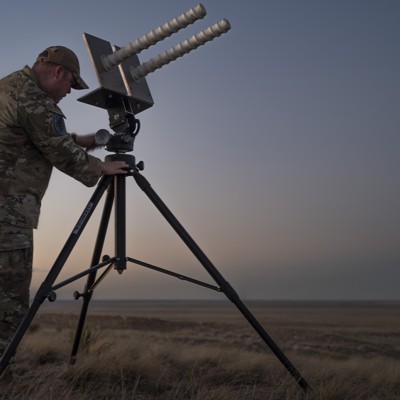
While many guardians are “employed-in-place,” meaning they are conducting missions at Space Force bases, the service also has deployable combat detachments that can provide space capabilities to combatant commanders if needed.
Robert Farley, a senior national security lecturer at the University of Kentucky, said it makes sense for the service to be advising and informing special operators of the capabilities available to them. But he questioned what it may look like if guardians had to deploy for special operations missions, and wondered if the service is prepared for that.
“I don’t know how that works on the ground,” Farley said. “If it is actually envisioning guardians operating with special operators, in an offensive context, that seems like a lot. That seems like a lot for a really small service that doesn’t have all the personnel and doesn’t really have the infrastructure for producing the kinds of people who would be operating in a special operations context.”
Read the full article here
