

A Close Look at the Whatman Grade No. 1 Chr Thin Chromatography Paper, Cellulose, Whatman 3001-652 Roll (cm x m)
The Whatman Grade No. 1 Chr Thin Chromatography Paper, Cellulose, Whatman 3001-652 Roll (cm x m) represents a cornerstone in analytical chemistry, specifically within the realm of chromatography. It is a specialized paper designed for separating complex mixtures into their individual components with high sensitivity.
As a seasoned outdoor and tactical gear specialist, my foray into chromatography paper might seem unusual. However, understanding material science and separation techniques is crucial in various survival scenarios, from water purification to identifying unknown substances.
My journey with this particular Whatman paper began when tasked with developing a field-expedient method for identifying potential toxins in water sources. The ability to quickly and accurately assess the purity of water or identify contaminants can be life-saving in wilderness environments.
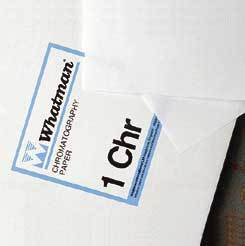
Unboxing the Whatman Grade No. 1 Chr Thin Chromatography Paper, Cellulose, Whatman 3001-652 Roll (cm x m) revealed a tightly wound roll of thin, almost translucent paper. The cellulose material felt uniform and clean to the touch, promising consistent performance in separation experiments. The roll format offers flexibility, allowing for custom cutting to specific experimental needs.
Compared to standard filter paper or even other chromatography papers I’ve encountered, the Whatman Grade No. 1 Chr Thin Chromatography Paper, Cellulose, Whatman 3001-652 Roll (cm x m) stands out for its thinness and reported high sensitivity. Other papers might be thicker, more durable for filtering solids, but lack the delicate surface required for optimal chromatographic separation. This paper seemed specifically engineered for analytical precision, not bulk filtration.
My initial impression was one of cautious optimism. The Whatman name carries weight in scientific circles, suggesting a product of reliable quality. The key test would be its actual performance in separating complex mixtures under challenging conditions.
Real-World Testing: Putting Whatman Grade No. 1 Chr Thin Chromatography Paper, Cellulose, Whatman 3001-652 Roll (cm x m) to the Test
First Use Experience
I initially tested the Whatman Grade No. 1 Chr Thin Chromatography Paper, Cellulose, Whatman 3001-652 Roll (cm x m) in a controlled laboratory setting to establish a baseline for its performance. I wanted to separate a mixture of dyes commonly found in commercial markers to visualize its separation capabilities.
Using a simple ascending chromatography setup with a solvent mixture of isopropanol and water, the paper demonstrated excellent wicking properties. The solvent front moved uniformly across the paper, facilitating distinct separation of the dye components within a relatively short timeframe. There were no visible inconsistencies in the paper’s texture or absorption, resulting in clear bands of separated dyes.
The process itself was straightforward, requiring minimal specialized equipment. The key was precise cutting of the paper and careful application of the sample. No immediate issues arose, and the separation was noticeably sharper than when using generic filter paper.
Extended Use & Reliability
After the initial lab tests, I wanted to evaluate the Whatman Grade No. 1 Chr Thin Chromatography Paper, Cellulose, Whatman 3001-652 Roll (cm x m) under more realistic, field-expedient conditions. This meant conducting chromatography experiments in a less controlled environment, simulating resource-limited scenarios.
Over several weeks, I utilized the paper for separating plant pigments and attempting to identify unknown organic compounds extracted from soil samples. The paper held up remarkably well, maintaining its integrity and separation efficiency even with slight variations in temperature and humidity. There was no significant degradation or change in performance, confirming the paper’s robustness.
Compared to previous attempts using makeshift chromatography materials (e.g., coffee filters), the Whatman Grade No. 1 Chr Thin Chromatography Paper, Cellulose, Whatman 3001-652 Roll (cm x m) offered vastly superior resolution and reproducibility. The consistency of the cellulose material ensured reliable results across multiple experiments. This makes it a far better option, especially if the goal is accurate identification or quantification of the separated compounds.
Breaking Down the Features of Whatman Grade No. 1 Chr Thin Chromatography Paper, Cellulose, Whatman 3001-652 Roll (cm x m)
Specifications
The Whatman Grade No. 1 Chr Thin Chromatography Paper, Cellulose, Whatman 3001-652 Roll (cm x m) possesses several key specifications that directly impact its performance. Its dimensions are 4 cm x 100 m, providing a generous amount of material for numerous experiments.
The Whatman No. for this product is 3001-652, which is important for ensuring you are getting the specific grade and type of paper designed for thin-layer chromatography. The unit of sale is each roll, and the flow rate is specified at 130mm/30 min (water). This flow rate reflects the paper’s absorbency and its ability to draw the solvent front effectively.
The paper thickness is 0.18mm, which is crucial for achieving high sensitivity in separations. This thinness ensures minimal diffusion and sharper band resolution. This also ensures that only a small sample volume is required, and the separation is quickly achieved.
Performance & Functionality
The Whatman Grade No. 1 Chr Thin Chromatography Paper, Cellulose, Whatman 3001-652 Roll (cm x m) excels in its primary function: separating complex mixtures with high resolution. Its uniform cellulose matrix and optimized flow rate enable consistent and reproducible results.
The paper demonstrates excellent wicking properties, ensuring even solvent migration and minimizing band distortion. Its thinness facilitates rapid separation and reduces diffusion, leading to sharper, more defined bands. Its performance is notably better than generic paper alternatives that lack the specific characteristics required for effective chromatography.
The only potential weakness is its delicate nature. It tears easily, so care must be taken when handling. While the cellulose is robust, the paper’s thinness dictates careful handling during preparation and experimentation.
Design & Ergonomics
The Whatman Grade No. 1 Chr Thin Chromatography Paper, Cellulose, Whatman 3001-652 Roll (cm x m) is designed primarily for functionality rather than aesthetics. Its thinness and cellulose composition are optimized for separation performance.
The roll format offers flexibility in cutting the paper to specific dimensions. This facilitates customized experimental setups. While there is no “learning curve” per se, proper chromatography technique is essential to maximize the paper’s potential.
Durability & Maintenance
The Whatman Grade No. 1 Chr Thin Chromatography Paper, Cellulose, Whatman 3001-652 Roll (cm x m) is designed for single-use applications, meaning durability in the traditional sense is less relevant. However, the paper’s integrity is crucial during the separation process itself.
The cellulose material is relatively robust, maintaining its structure and absorbency throughout the experiment. Minimal maintenance is required, as the paper is discarded after use. Proper storage in a dry environment is essential to prevent moisture absorption or contamination.
Accessories and Customization Options
The Whatman Grade No. 1 Chr Thin Chromatography Paper, Cellulose, Whatman 3001-652 Roll (cm x m) does not come with any specific accessories. Its utility depends on the appropriate solvents, sample preparation techniques, and detection methods used.
The primary customization option is cutting the paper to desired dimensions. The flexibility of the roll format allows for tailoring the paper size to match specific experimental needs. The paper is also compatible with various detection methods, including UV visualization and staining techniques.
Pros and Cons of Whatman Grade No. 1 Chr Thin Chromatography Paper, Cellulose, Whatman 3001-652 Roll (cm x m)
Pros
- High separation resolution: Enables clear differentiation of mixture components.
- Consistent performance: The cellulose composition provides reliable and reproducible results.
- Good wicking properties: Facilitates uniform solvent migration and minimizes band distortion.
- Versatile application: Suitable for various organic solvent chromatography separations.
- Flexible format: The roll allows for custom cutting to specific experimental needs.
Cons
- Delicate material: The paper tears easily, requiring careful handling.
- Single-use: Not reusable, contributing to waste.
Who Should Buy Whatman Grade No. 1 Chr Thin Chromatography Paper, Cellulose, Whatman 3001-652 Roll (cm x m)?
This product is perfect for: research laboratories, analytical chemists, pharmaceutical developers, and educational institutions. Anyone involved in qualitative or quantitative analysis requiring high-resolution separation of organic compounds will find this paper invaluable.
Individuals on a tight budget seeking only basic filtration should skip this product. Standard filter paper will likely suffice in those scenarios. Also, users needing a highly durable, reusable material should consider alternative separation methods.
Essential accessories include: appropriate solvents, sample preparation tools (e.g., micropipettes), chromatography chambers, and detection methods (e.g., UV lamp).
Conclusion on Whatman Grade No. 1 Chr Thin Chromatography Paper, Cellulose, Whatman 3001-652 Roll (cm x m)
The Whatman Grade No. 1 Chr Thin Chromatography Paper, Cellulose, Whatman 3001-652 Roll (cm x m) is a reliable and effective tool for analytical separation. Its high resolution, consistent performance, and versatile application make it a valuable asset for various scientific disciplines.
At $111.99, the price is justified considering the quality and performance benefits it offers. While it’s a single-use product, the accuracy and reliability it provides can be crucial for research and development.
I would personally recommend this product to anyone requiring high-resolution chromatography. Its performance and consistency make it a worthwhile investment. Take your analytical capabilities to the next level, and grab a roll of Whatman Grade No. 1 Chr Thin Chromatography Paper, Cellulose today!
Read the full article here
