

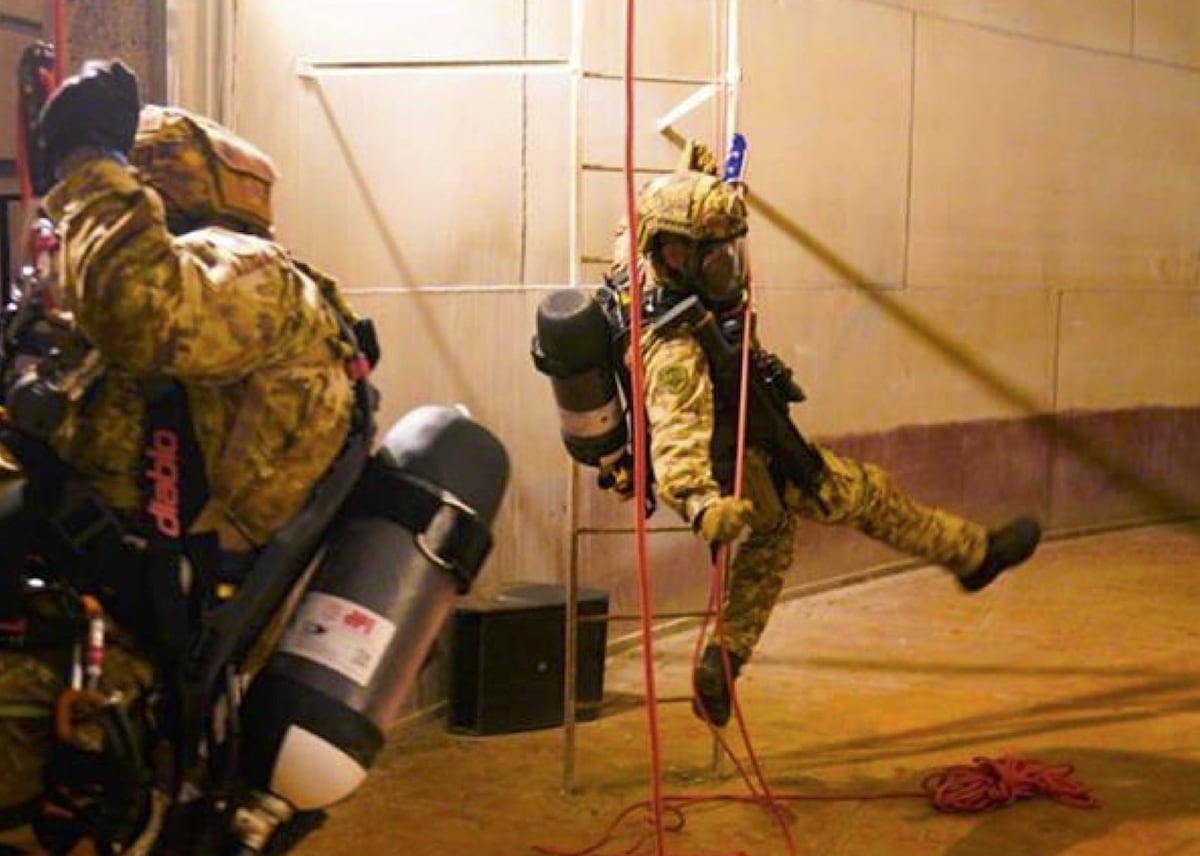
ROME — Battles in tunnels in Gaza and fierce underground fighting in Ukraine have convinced special forces units around the world to brush on the latest techniques in subterranean combat, but they are facing a problem — where do you train for that?
One answer lies in Italy, where a growing number of nations are lining up to use an unlikely location built deep underground in the 1930s by the government of Italian fascist dictator Benito Mussolini.
Lurking under woodland in Fornovo Taro near Parma lies a system of five massive, drum-shaped cisterns which once held aviation fuel as well as 2km of connecting passageways, all designed to withstand enemy bombing.
“Gaza has accelerated the use of this place like this – despite their technology, the Israelis were not ready for fighting in tunnels,” said a manager at the site, who spoke to Defense News but declined to be named due to company policy.
Israel is among 17 national customers who have now trained at the privately run site known as La Carona, with other special forces units arriving from countries including Belgium, France, Germany, Holland, Poland, Greece and Turkey.
The U.S. Green Berets have also used the site as does a dedicated Italian army underground fighting unit created by the Italian army Folgore paratrooper brigade.
After resisting 150 bombing runs by the Allies in the Second World War, the cisterns continued to be used by the Italian Air Force to hold aviation fuel until 2000 when the site was abandoned and the fuel drained out.
In 2020 the La Carona was purchased and reopened for training by its current owners.
“We saw the site and decided it would be perfect for special forces training,” said the manager.
The cylindrical tanks, which are supported by concrete columns, measure around 20 meters in diameter by seven meters in height and are linked by tunnels which once channelled fuel between them. Another 1km long tunnel once carried fuel to a nearby train station.
Special forces entering the tunnels now engage in simulated combat.
The space recreates the limitations of real tunnel fighting – from darkness, to limited radio use to no GPS. A control room allows trainers to generate sound, including the noise of explosions, as well as smoke and lighting.
Robot canines and real dogs, as well as drones that can function without GPS can all be introduced.
“The key ability to learn here is how to map underground spaces,” said the manager.
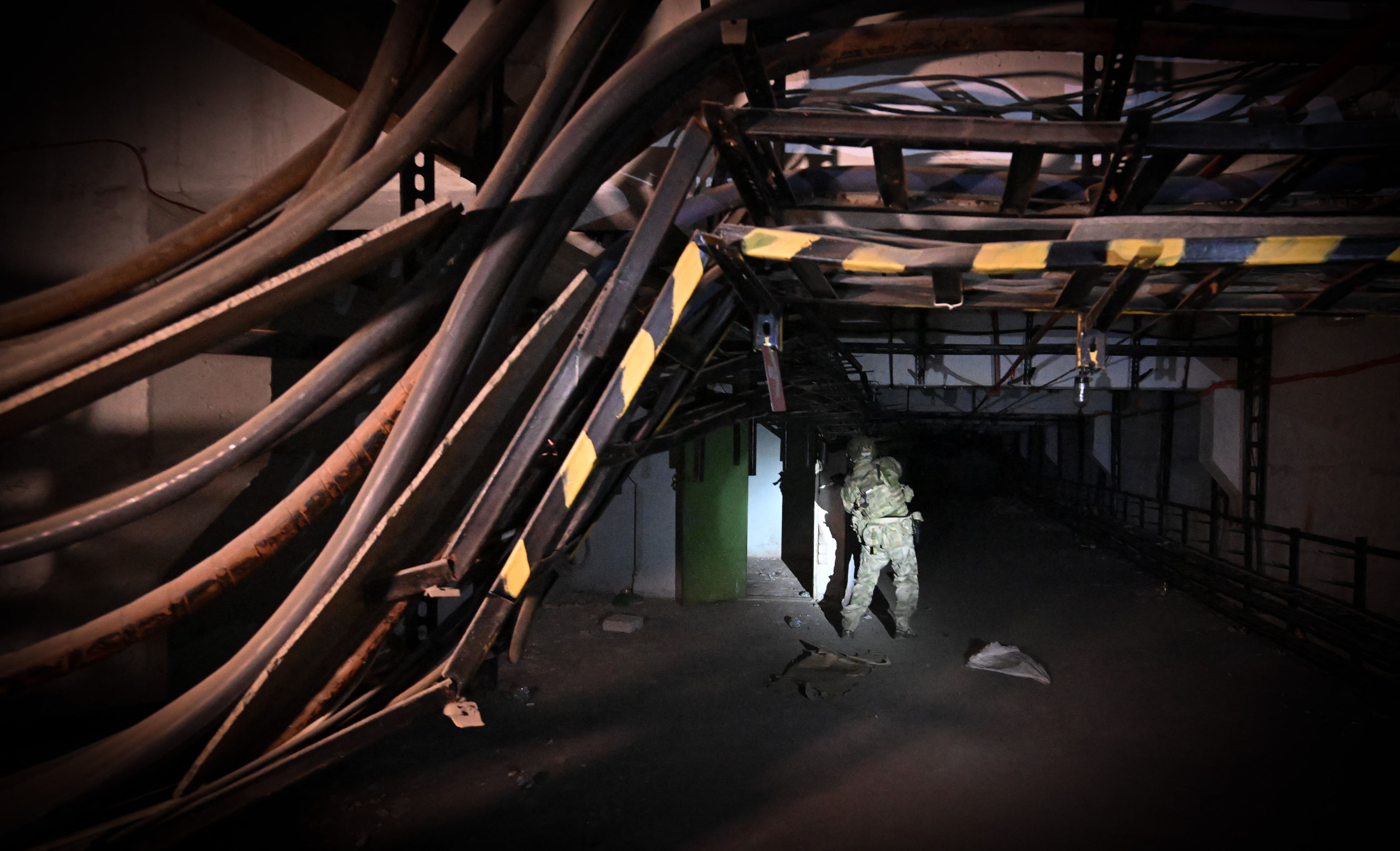
Combat in tunnels grabbed the headlines as the Israel Defense Forces entered the so-called Gaza Metro – a system of tunnels thought to total hundreds of miles – when it sought out hostages taken during the Oct 7, 2023, Hamas attack on Israel.
A year earlier, Ukrainian forces held out for weeks against Russian attacks in the labyrinth of underground tunnels under the Azovstal iron and steel works in Mariupol, which was described as a ‘fortress within a city’.
“Most of the world’s population now lives in an urban setting and war is increasingly fought in cities. Underground combat can make the difference,” said the manager.
Tom Kington is the Italy correspondent for Defense News.
Read the full article here
