

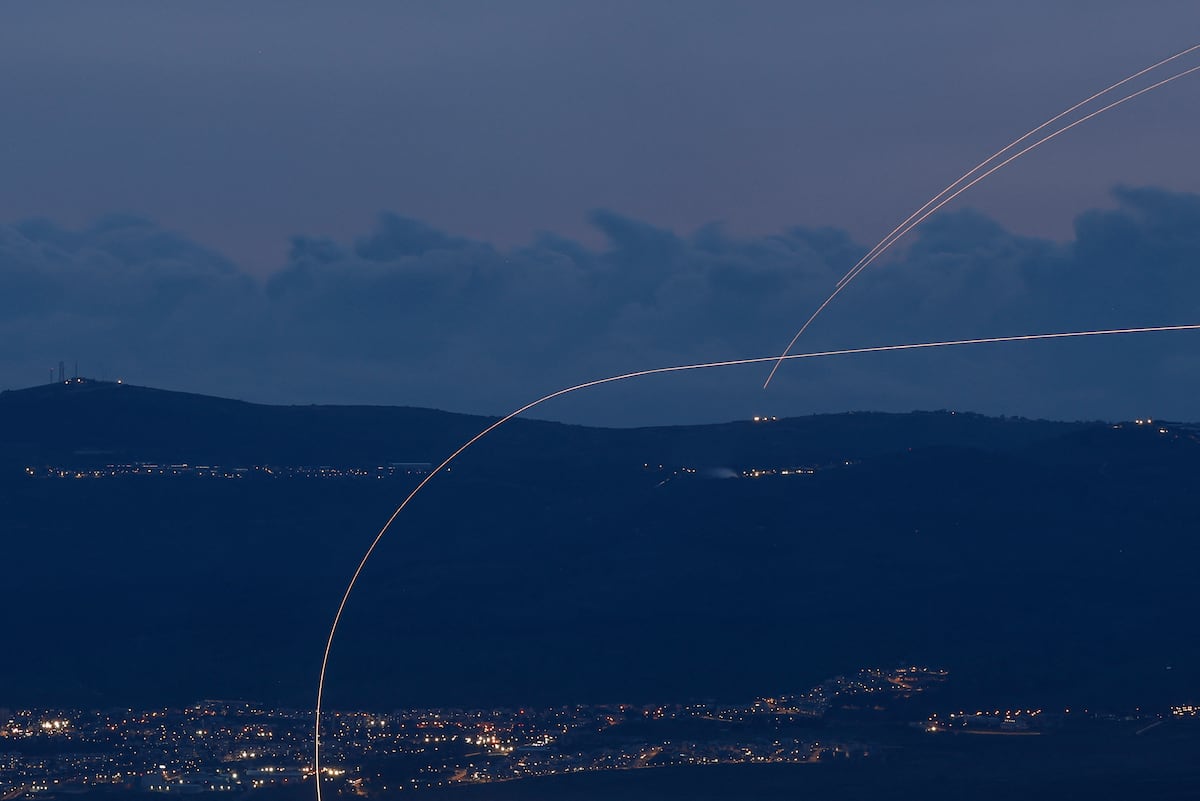
JERUSALEM — Israel has successfully completed a series of tests on an upgraded version of its Iron Dome aerial defense system, demonstrating new joint operational capabilities with the Iron Beam laser system, the Israeli ministry of defense said on Tuesday.
The defense ministry declined to provide technical specifics on the modifications. However, it stated that the upgrades enhance the system’s ability to contend with high rates and volumes of fire, allowing Israel’s air defenses to more effectively manage massive, concentrated saturation salvos.
A key element of the latest test series was the operational integration of the Iron Beam. During the tests, joint operational scenarios were successfully executed and managed directly from the Iron Dome’s battle management center, the government said.
This integration is a prerequisite for future operational deployments allowing commanders to dynamically toggle between missile and laser interceptions based on the nature of the incoming threat, system availability and cost-benefit calculations.
Israel’s announcement comes amid a U.S.-Iran ceasefire, a diplomatic development that has left Israel in a state of high strategic tension along its northern border with Lebanon, where it continues to endure persistent drone salvos launched by Hezbollah.
The Iron Dome was declared operational in 2011, when it also achieved its historic first interception of a Gaza-launched Grad rocket, and since formed the backbone of Israel’s multi-layered air defense network. Each of its batteries consists of a radar system, a command center and missile launchers carrying about 20 Tamir interceptors, protecting against threats within a range of 4 to 70 kilometers.
The primary developer for the Iron Dome is the Israeli firm Rafael, which is also the primary developer for the Iron Beam.
That system is designed to neutralize targets within four to five seconds from the moment it locks onto the target, at ranges up to 10 kilometers. An Iron Beam laser pulse is deemed to cost only a few dollars while a single Tamir interceptor missile costs roughly $50,000.
Tzally Greenberg is the Israel correspondent for Defense News. He has experience reporting on economic affairs as well as defense and cyber companies.
Read the full article here
