

Iran has put its rhetorical “fingers on the trigger,” the regime’s foreign minister warned Wednesday, as the United States revives threats to mount an attack on the Islamic Republic “with speed and violence.”
Abbas Araghchi, in a post on X, asserted that Iranian armed forces stand ready “to immediately and powerfully” counter any aggression. He argued that Tehran had learned from last year’s 12-day war with Israel — which also drew in the U.S. — to be primed to deliver a more forceful response.
“I do think the threat of a massive Iranian retaliation should be taken seriously,” Ali Vaez, Iran project director for the International Crisis Group, told Military Times. “It’s coming at a time that the regime is basically fighting for its life. It’s in survival mode. Therefore it can act in a reckless way.”
President Donald Trump, who has cited varying rationales for a possible attack, suggested on Wednesday that American strikes would be imminent unless Iran agreed to abandon its nuclear program.
Earlier this month, he pledged to aid civilians as anti-regime protests roiled the country and a deadly government crackdown ensued, though he later said he “convinced himself” not to intervene. Human rights groups contend the death toll from the strife is in the thousands.
There have been no signs of progress in negotiations between the U.S. and Iran since tensions escalated, officials say. The dangerous impasse has prompted key Gulf allies to seek to create a diplomatic off-ramp between Washington and Tehran.
Saudi Crown Prince Mohammed bin Salman said Riyadh ruled out allowing the U.S. to use its airspace or territory for a potential military operation against Iran.
A U.S. official said Washington has three demands for the regime centered around permanently ceasing uranium enrichment; limiting its ballistic missile stockpile; and ending its support for the Axis of Resistance. But there has been no indication that Tehran is prepared to accede to any of those terms.
Trump’s top diplomat called the military buildup in the Middle East a necessary baseline to protect troops.
“We have 30 to 40,000 American troops stationed across eight or nine facilities in that region,” Secretary of State Marco Rubio told a congressional hearing on Wednesday. “All are within reach of an array of thousands of Iranian one-way UAVs and Iranian short-range ballistic missiles that threaten our troop presence.
“We have to have enough force and power in the region just on a baseline to defend against that possibility.”
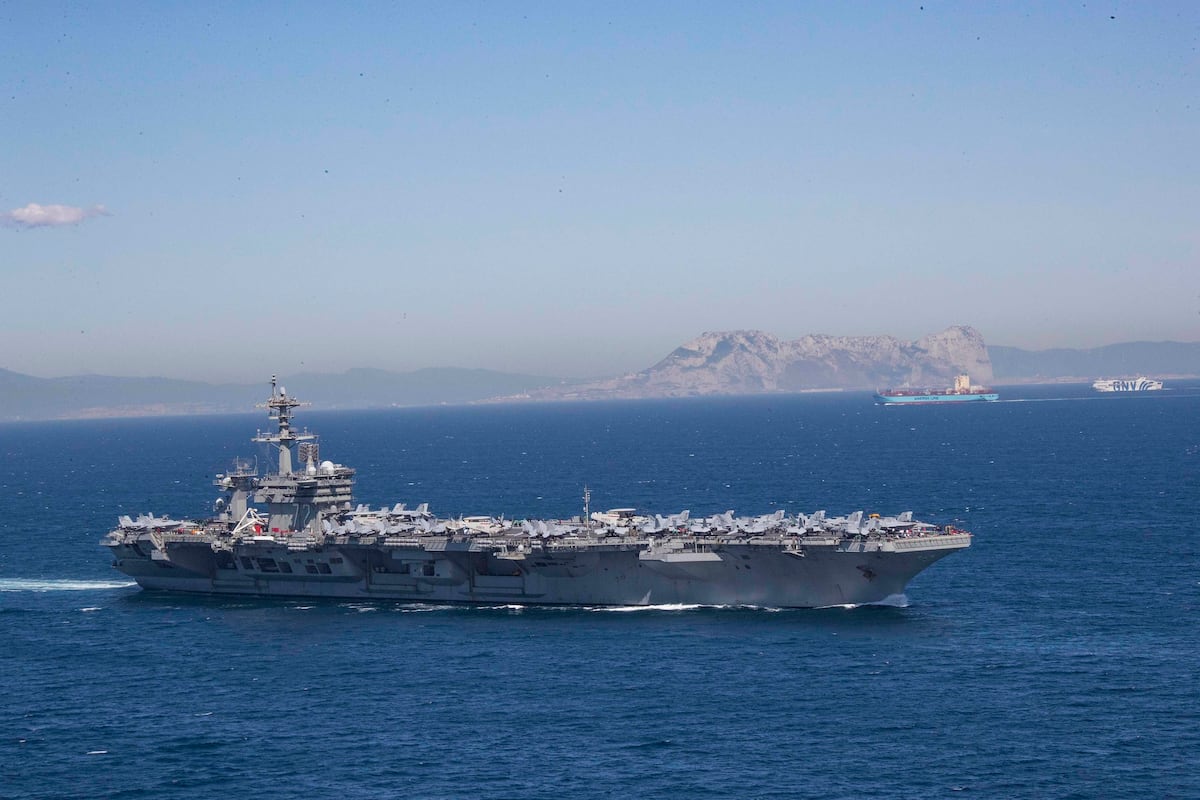
The linchpin of the American armada is the USS Abraham Lincoln, an aircraft carrier that entered the U.S. Central Command’s area of responsibility on Monday. Washington has also dispatched other assets into the region, including warships and the F-15E Strike Eagle fighter jet, the military said.
Iran, however, has enhanced its naval and short-range missile capabilities with the objective of sinking U.S. warships, according to Vaez.
“All of these in the south [of Iran] have been developed precisely to target U.S. warships. And Iran didn’t use any of these capabilities in the 12-day war, so all of those capabilities are intact,” he said. “The U.S. can no doubt defeat Iran, but it will come with the kind of price tag that so far the president has demonstrated he’s reluctant to pay.”
Tanya Noury is a reporter for Military Times and Defense News, with coverage focusing on the White House and Pentagon.
Read the full article here
