

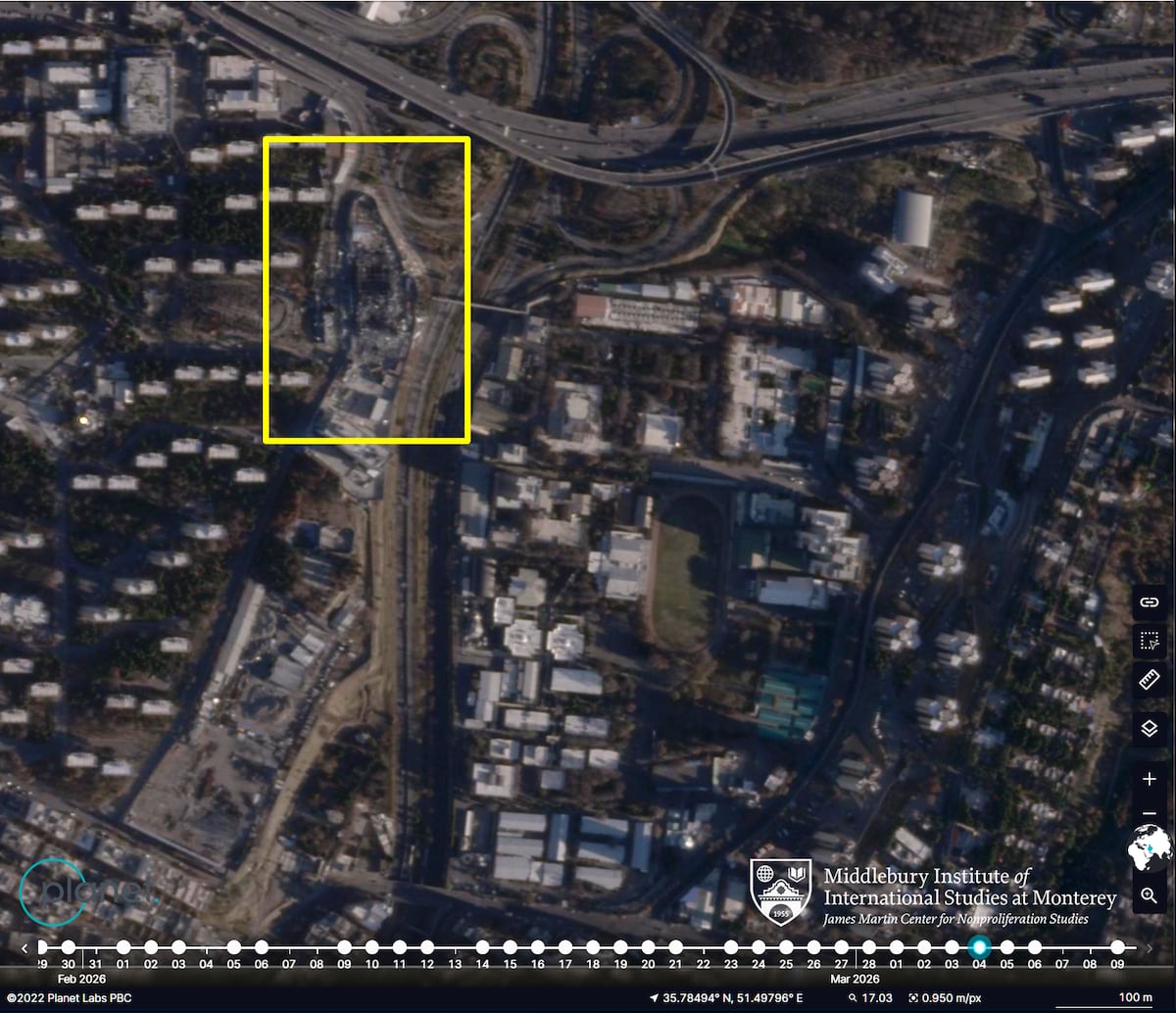
BERLIN — Iranian facilities affiliated with chemical and biological weapons research have been hit by the United States and Israel without much fanfare, satellite imagery and the analysis of images shared on social media show.
Among the sites destroyed in recent weeks are key sites operated by the Iranian Ministry of Defense, the Iranian Revolutionary Guards Corps and hybrid entities that straddle civilian and military applications.
In some cases, the Israeli armed forces publicized the strikes either as early warnings or after the fact; in others, they were not publicized at all and were only detected by researchers using satellite imagery and ground-truth photos trickling out of Iran.
“It almost seems like an afterthought and lower priority to the war planners,” said Jim Lamson, a former Iran analyst for the CIA of 23 years who is now a visiting fellow at the Department of War Studies with King’s College London and senior research associate at the California-based Center for Nonproliferation Studies.
“To me, it doesn’t look like a real robust CBW-specific campaign,” he said, using the acronym for chemical and biological weapons.
Many of the sites that were struck, like the headquarters of the Organization of Defensive Innovation and Research (SPND) or the Malek Ashtar University of Technology, were hit for their roles in the nuclear and missile programs rather than their chemical and biological research, according to Israeli messaging.
RELATED
This missing focus is not without reason: The chemical and biological threat from Iran may simply not be what some pundits have long made it out to be, Lamson said.
And it’s in line with the U.S. government’s own longstanding assessment. While Washington has warned that Tehran has long dabbled in research regarding these weapons of mass destruction, there has not been talk of any significant arsenal, stockpile or deployment capability for these tools in decades.
Iran is also a full member of both the Biological and the Chemical Weapons conventions. Defensive research – such as manufacturing agents to develop countermeasures and antidotes – is permitted under both pacts, though the line between defensive and offensive applications is blurry.
While the U.S. government in its own publications has repeatedly declared Iran non-compliant with its CWC obligations, Washington has for decades not outright accused Tehran of stockpiling an arsenal of chemical weapons. Instead, since the early 2000s, the State Department and CIA have softened the language to say that Iran “maintains the capability to produce CW agents.”
In its annual compliance reports, the U.S. has focused on historical transfers to Libya in the 1970s and 1980s, failure to fully declare its holdings of riot-control agents – which are illegal as a weapon of war, but legal for domestic use – and what it calls the incomplete declaration of production facilities. In 2024, it added that Iran had allegedly weaponized pharmaceutical-based agents such as fentanyl.
RELATED
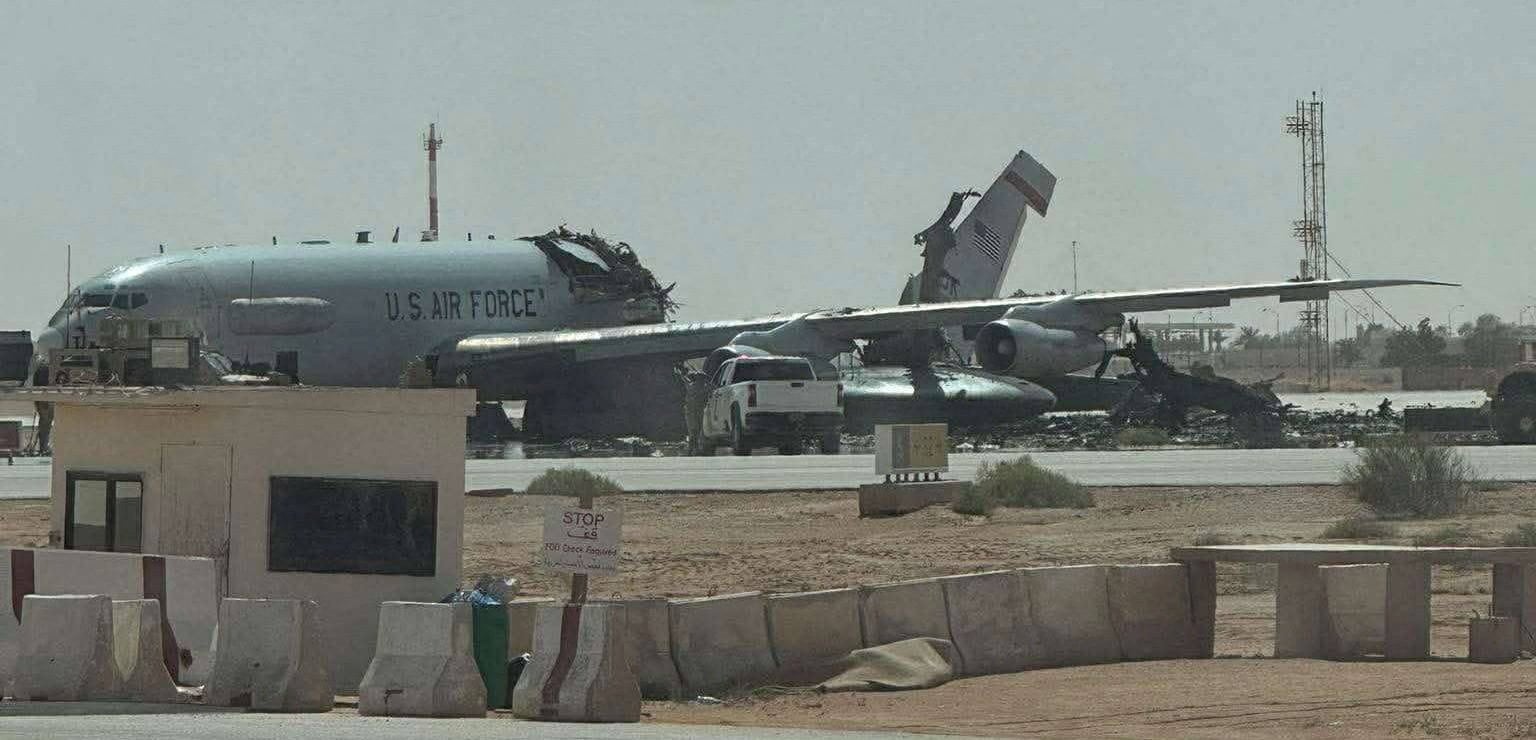
Others in the think-tank world have persistently described Iran’s program as a real threat that should be addressed. In a memo penned days before U.S. President Donald Trump launched attacks on Iran on Feb. 28, the Washington-based Foundation for Defense of Democracies highlighted the continued concerns with Iran’s research and access to chemical weapons, including the threat that they may be proliferated to its proxies in the region or used against its own people to crush uprisings.
Andrea Stricker, the foundation’s nonproliferation program deputy director, also cited intelligence assessments from the mid-2000s that suggested Iran had maintained an undeclared stockpile of chemical weapons.
Lamson has been tracking the Iranian sites involved in these programs since before the first waves of strikes in 2025, in which a handful of them were destroyed, but many more were left unharmed.
The Iranian chemical and biological programs, he said, were likely intended to maintain a “threshold capability” similar from its pre-war nuclear stance: having the dual-use industries and research established so that if Iran made the decision to manufacture the weapons, the breakout time would be relatively short.
But, at present, “this does not look like a dedicated offensive CBW program with production, agents and delivery systems to me,” he said.
Within Iran, the threat perception that the U.S. or Israel – which is not a signatory of the Biological Weapons Convention and has not ratified the Chemical Weapons Convention – may use these weapons of mass destruction against Iran is very real.
It’s a deep-seated fear, rooted in the Iran-Iraq war of the 1980s, during which Iraq, at the time supported by many Western countries and using Western-imported gear, launched thousands of chemical attacks against both Iranian soldiers and civilians. More recently, senior government officials in Tehran have alleged Western biological warfare against government targets in statements ranging from fearful to conspiratorial and often conveniently timed to distract from domestic failings.
As a result of the perceived threat, some factions in Iran’s government have pushed for a more active development of chemical and biological capabilities, and a broader consensus on maintaining capable defensive research abilities exists within the relevant policy elites.
What results is a latent capability, in the form of disparate institutes and industrial sites, that have some chemical and biological weapons applications, but no centralized, large-scale BWC program.
The lack of prominence in the shifting explanation for the war is puzzling, argues Lamson.
“If the U.S. and Israel really had concerns over chemical and biological weapons, like they’ve said over the years, why wasn’t it a stated threat, a justification, leading up to it?” he asked. In both the Iraq wars of 1991 and 2003, Lamson pointed out, the military and even Israeli civilians had been equipped with gas masks and other gear to mitigate CBW attacks coming their way.
“Unless it was done very quietly, we haven’t seen that in this instance, which to me, again, reflects the fact that Israel and the U.S. for whatever reason, weren’t that concerned that there were going to be actual CW and BW used against them,” Lamson said.
Linus Höller is Defense News’ Europe correspondent and OSINT investigator. He reports on the arms deals, sanctions, and geopolitics shaping Europe and the world. He holds master’s degrees in WMD nonproliferation, terrorism studies, and international relations, and works in four languages: English, German, Russian, and Spanish.
Read the full article here
