

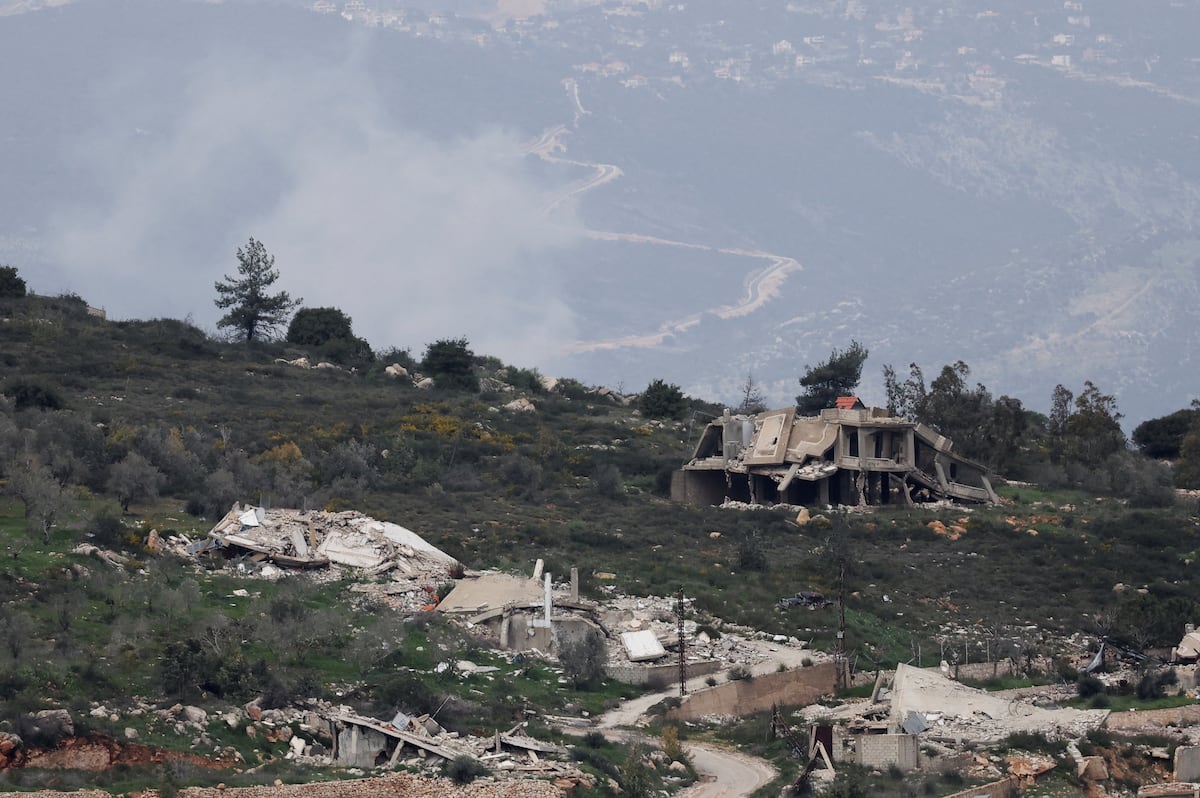
Israel is forging ahead with its incursion into Lebanon, in what it claims is a vital fight against Hezbollah, the Iranian-backed militant group. The operation, which began on Monday, is separate from the joint U.S.-Israel war on Iran, but the dynamics of each conflict zone will inevitably intersect with each other.
The Israeli deployment is expected to last several weeks and is part of a broader effort to dismantle Hezbollah’s military capabilities and eradicate its fighters in the area, a spokesperson for the Israel Defense Forces asserted to Military Times. The offensive is intended to “remove threats and create an additional layer of security for residents of northern Israel,” the spokesperson said.
President Donald Trump’s attention remains fixed on the war in Iran but a White House official affirmed to Military Times that the U.S. supports the Israeli campaign to disarm Hezbollah and other non-state actors in Lebanon, calling it “crucial” for regional stability.
The U.S. also does not skimp on ensuring Israel’s security. A 2025 Congressional report noted that Washington has provided Jerusalem $174 billion in bilateral assistance and missile defense funding to date — underscoring the deep strategic ties that sustain Israeli operations.
RELATED
The question of Israel’s influence on U.S. foreign policy has become even more heated since the war on Iran began. Prominent conservative commentators have suggested that Israeli Prime Minister Benjamin Netanyahu has, in effect, maneuvered the U.S. into fighting an unnecessary war with Iran.
The politics of the issue became even sharper on Tuesday when Trump’s director of the National Counterterrorism Center, Joe Kent, quit in protest. In his resignation letter, which he published on social media, Kent claimed that “high ranking Israeli officials and influential members of the American media” had created an echo chamber to “deceive” Trump into believing there was an imminent threat from Iran. Sen. Mitch McConnell, R-Ky., in turn, accused Kent of “virulent anti-Semitism” in the resignation letter.
For years, Netanyahu fulminated against Iran’s nuclear program but feared any direct confrontation with Tehran would spark retaliation from Hezbollah in southern Lebanon.
“Iran established an armed and trained Hezbollah in Lebanon to serve as a deterrent and to be able to hit and hurt Israel in a major way,” Paul Salem, a senior fellow at the Middle East Institute, said in an interview with Military Times. “That was always Israel’s main concern: If we were to confront Iran, Hezbollah could hit [back] really hard.”
Hezbollah’s ideology centers on its enmity toward Israel and the West, which it casts as existential enemies. The Islamic Republic has provided Hezbollah with financing, training and advanced weaponry — propelling the group’s rise, over years, to become the region’s most powerful non-state actor.
However, Hezbollah suffered a devastating blow to its strength in September 2024, when thousands of pagers used by the group’s members detonated, having been meddled with by Israel. Before and since then, Hezbollah has been weakened by Israeli assaults.
A ceasefire between Hezbollah and Israel largely held from November 2024 until the U.S.-Israeli operation on Feb. 28 that killed Iran’s supreme leader, Ayatollah Ali Khamenei. The assassination triggered Hezbollah to fire rockets at Israel on March 2, prompting retaliatory strikes from Israel.
The past two weeks of fighting in Lebanon have left nearly 1,000 dead and forced more than 1 million people — roughly a quarter of the country’s population — to flee their homes. Israel’s leaders have signaled the next phase of the conflict could resemble its operations in the Gaza Strip, where much of the enclave has since been leveled by the IDF.
“I think they can do that,” Salem, of the Middle East Institute, said. “They will be challenged by Hezbollah, so it won’t be calm and uncontested, but they have the predominant power until or unless there is possibly a ceasefire at some point.”
Canada, France, Germany, Italy and the United Kingdom, in a joint statement, warned that a significant Israeli ground offensive in Lebanon would have “devastating humanitarian consequences and could lead to a protracted conflict.”
A State Department spokesperson told Military Times on Thursday that Ambassador Michael Issa is spearheading all diplomacy with Lebanon. The spokesperson reaffirmed the U.S. “fully supports” Israel’s right to defend itself against Hezbollah, while also emphasizing that Washington backs the Lebanese government’s efforts to reassert sovereignty over the entire country.
Tanya Noury is a reporter for Military Times and Defense News, with coverage focusing on the White House and Pentagon.
Read the full article here
