

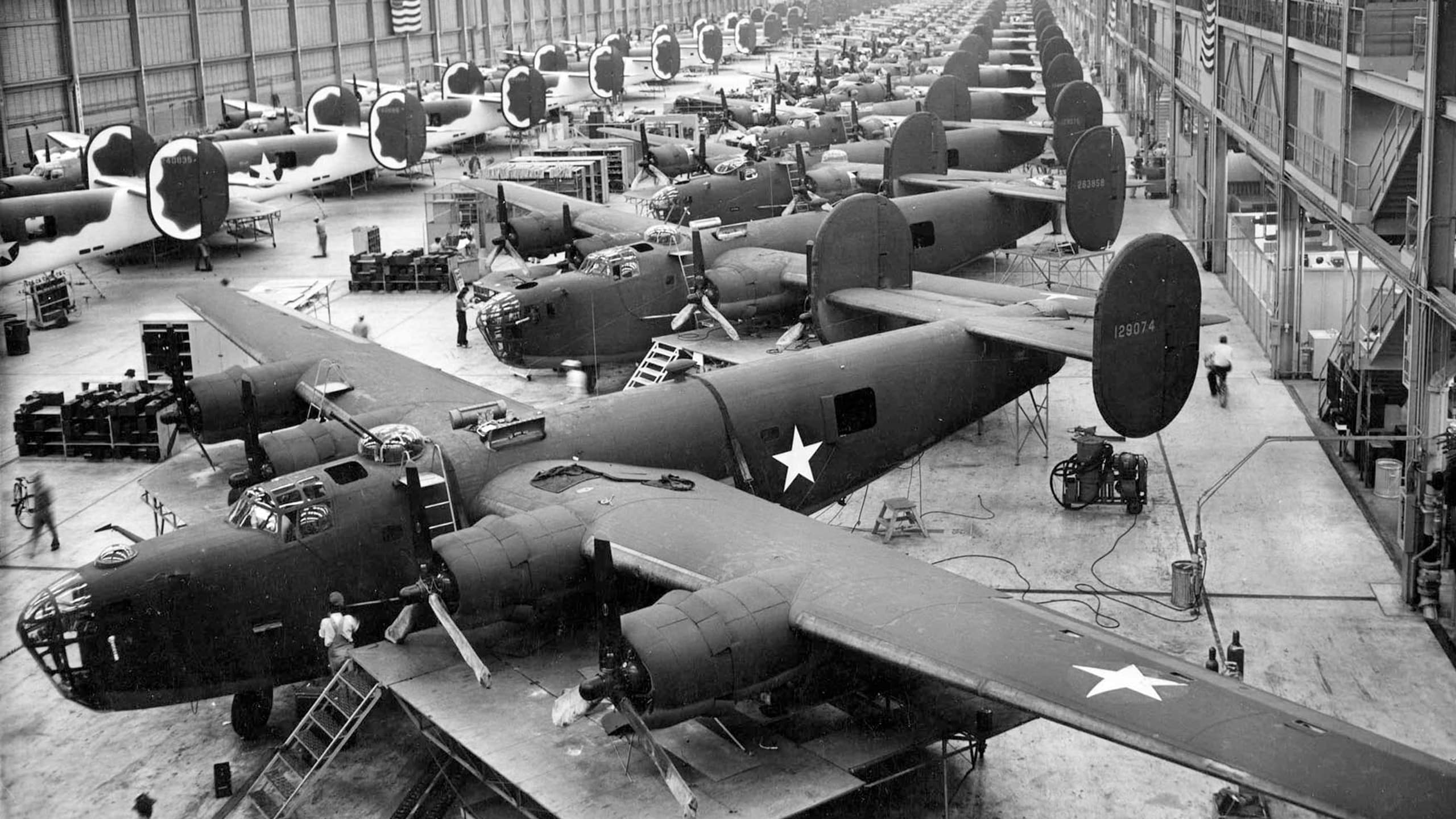
American bombers in World War II represented the most significant leap in strategic air power the world had ever seen. Between 1941 and 1945, the United States Army Air Force (U.S.A.A.F.) deployed an unprecedented array of bombing aircraft across both European and Pacific theaters. From light attack bombers like the Douglas A-20 Havoc to massive heavy bombers like the B-29 Superfortress, these aircraft fundamentally altered how nations conducted warfare.
The American bomber force wasn’t just about heavy four-engine aircraft. It encompassed three distinct categories that served different tactical and strategic purposes. Light bombers such as the A-20 Havoc and the Lockheed Hudson conducted reconnaissance, anti-submarine patrols, and tactical ground support. Medium bombers, including the B-25 Mitchell, B-26 Marauder, and later A-26 Invader, struck transportation networks, bridges, and tactical targets. Heavy bombers, including the B-17 Flying Fortress, B-24 Liberator, B-29 Superfortress, and B-32 Dominator, carried out the strategic bombing campaign that systematically dismantled Axis industrial capacity.
This comprehensive bomber arsenal enabled the United States to project power at every operational level. Each aircraft type filled specific roles that complemented the others. Together, they created an integrated air offensive that forced adversaries to divert massive resources to air defense while enabling the Allies to dominate the skies and eventually achieve total air superiority. Understanding these aircraft categories and their distinct contributions reveals how American airpower shaped the war’s outcome.
U.S. Light Bombers: Tactical Flexibility
Light bombers served as the workhorses for tactical operations, reconnaissance, and specialized missions that heavy bombers couldn’t efficiently perform. These twin-engine aircraft carried smaller bomb loads but offered speed, maneuverability, and versatility that made them indispensable throughout the war.
Douglas A-20 Havoc
The Douglas A-20 Havoc served as one of the most versatile aircraft in the American arsenal. Developed in the late 1930s, the A-20 entered production before Pearl Harbor and saw service in every major theater. The aircraft carried a three-man crew and could haul up to 4,000 pounds of bombs at speeds fast for its era.

What made the Havoc exceptional was its adaptability. The aircraft flew as an intruder-bomber striking targets at night, a ground-attack aircraft supporting troops with forward-firing guns and bombs, and a reconnaissance platform photographing enemy positions. Different variants mounted configurations ranging from glazed nose sections for bombardiers to solid noses packed with six or eight .50-caliber machine guns for strafing.

The Soviet Union received over 3,000 A-20s through Lend-Lease, where they called it the “Boston” after its British designation. Soviet crews appreciated its ruggedness and reliability in its brutal ground-attack role on the Eastern Front. In the Pacific, A-20s flew low-level strikes against Japanese shipping and airfields. The aircraft wasn’t glamorous like the B-17, but it got the job done day after day without demanding the resources that heavy bombers required.
Douglas B-18 Bolo: Obsolete but Needed
The Douglas B-18 Bolo represents what might have been America’s frontline bomber if development had stalled. Douglas designed the aircraft in the mid-1930s, essentially a bomber derivative of the DC-2 commercial transport. When the Army Air Corps held its 1935 bomber competition, both the B-18 and Boeing’s Model 299, which became the B-17, competed. The B-18 won the initial production contract, largely because it cost half as much as Boeing’s four-engine design.

However, by the time of the Japanese sneak attack on Pearl Harbor in 1941, the B-18 was already obsolete. Its performance couldn’t match modern fighters, its defensive armament was inadequate, and its bomb load was limited. Several B-18s were destroyed on the ground at Pearl Harbor and in the Philippines. The aircraft briefly flew anti-submarine patrols over American coastal waters before being relegated to training duties.

The B-18’s obsolescence illustrated how rapidly aviation technology evolved in the late 1930s. An aircraft considered adequate in 1936 was dangerously outdated by 1941. This reality drove the Army Air Forces to continuously pursue improved designs, resulting in a succession of increasingly capable bombers. The B-18 served primarily as a cautionary example and a training platform for bomber crews before they transitioned to combat-worthy aircraft.
Medium Bombers: The Tactical Backbone of Allied Air Operations
Medium bombers represented the sweet spot between tactical flexibility and striking power. These twin-engine aircraft could carry substantial bomb loads over moderate distances, making them ideal for interdiction, close air support, and strikes against tactical targets such as bridges, rail yards, and troop concentrations. They operated at altitudes and speeds that balanced survivability against effectiveness.
North American B-25 Mitchell: Versatility Personified
The North American B-25 Mitchell gained instant fame through the Doolittle Raid in April 1942. Sixteen Mitchells, launched from the aircraft carrier USS Hornet (CV-8), struck Tokyo in a psychologically devastating attack that demonstrated Japan’s vulnerability just four months after Pearl Harbor. Lt. Col. James Doolittle led the mission, and while physical damage was minimal, the strategic impact was enormous. Japan recalled forces for home defense and made the disastrous decision to attack Midway Island, where the U.S. Navy destroyed four Japanese carriers.
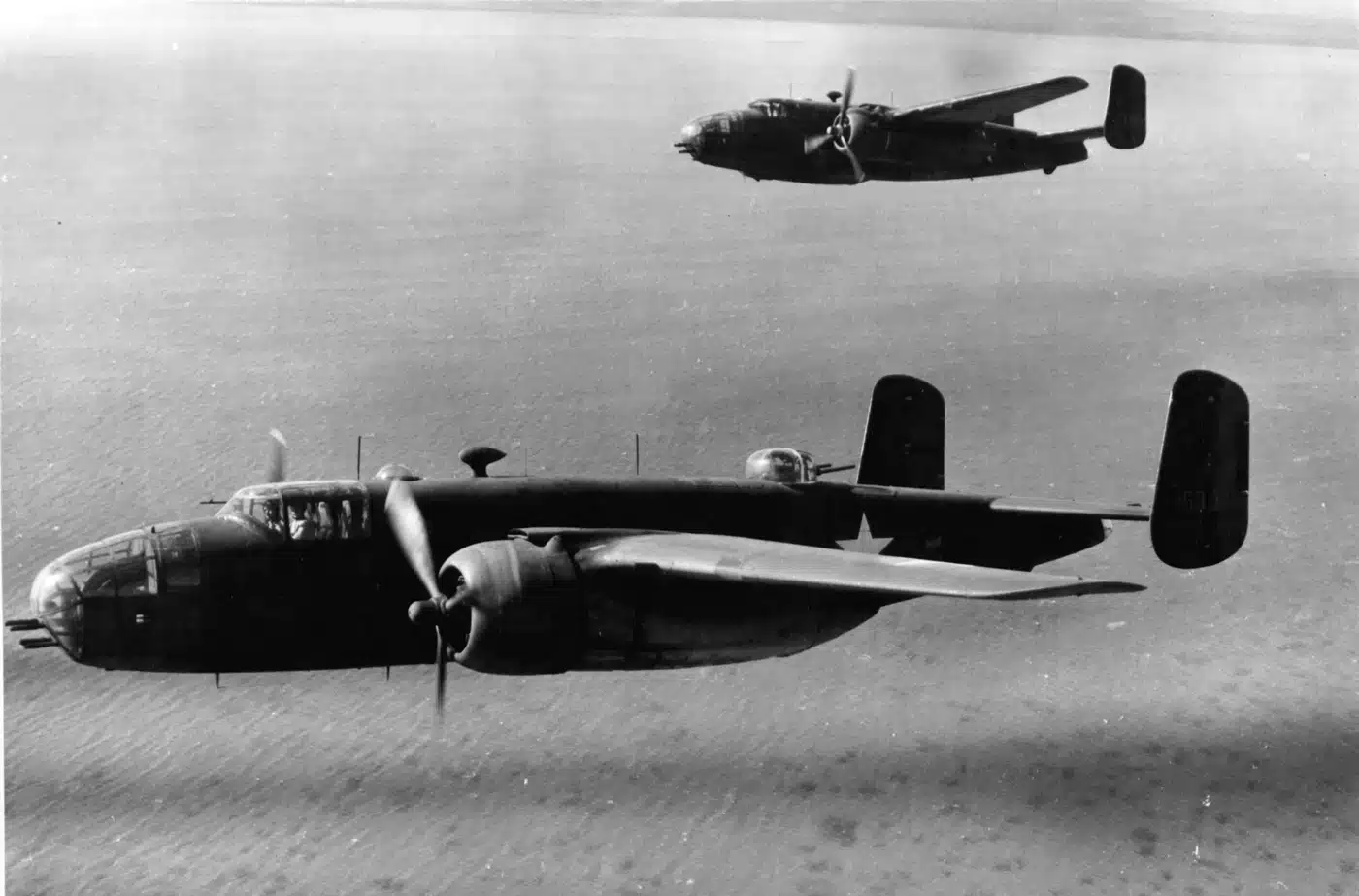
Beyond publicity missions, the Mitchell excelled as a versatile medium bomber. North American produced over 10,000 B-25s in variants optimized for different roles. The B-25G and B-25H models mounted a 75mm cannon in the nose — essentially a flying artillery piece — for anti-shipping strikes in the Pacific. Strafer variants packed up to fourteen forward-firing .50-caliber machine guns, transforming the bomber into a devastating ground attack platform that decimated Japanese airfields and convoys.
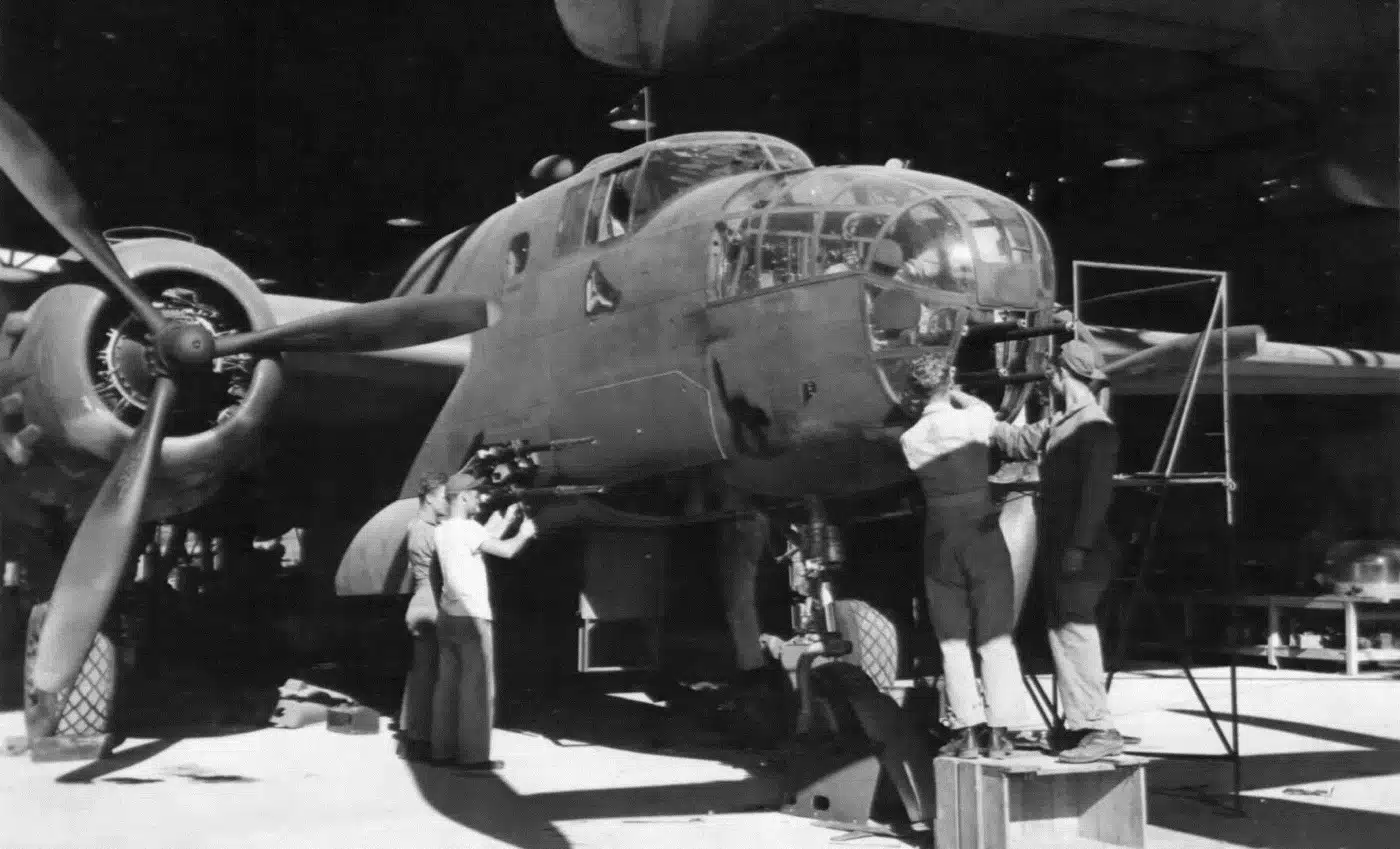
Crews loved the Mitchell. It handled predictably, was relatively forgiving of pilot errors, and could absorb battle damage better than many contemporaries. The aircraft served with distinction in every theater — from the Aleutian Islands to North Africa, from Italy to the Southwest Pacific. Its reliability and ease of maintenance made it popular with ground crews as well. Perhaps more than any other aircraft, the B-25 embodied the practical, workable approach that characterized American aviation engineering.
Martin B-26 Marauder: From Widowmaker to Lowest Loss Rate
The Martin B-26 Marauder had a terrible reputation initially. Its high wing loading meant fast landing speeds — pilots transitioning from other aircraft found it unforgiving. Training accidents mounted. Crews called it the “Widowmaker.” Some training units refused to fly it. The aircraft nearly got canceled.

But proper training and operational experience revealed a highly capable aircraft. Martin lengthened the wingspan to reduce wing loading, and the Army Air Forces improved training curricula. By 1943, the B-26 achieved the lowest loss rate of any American bomber in Europe: less than one-half of one percent per mission. That statistic validated Martin’s design philosophy: build a fast, sturdy bomber that could outrun or absorb punishment from interceptors.

The Marauder flew primarily in the European and Mediterranean theaters with the Ninth Air Force. Its missions focused on tactical bombing — knocking out bridges ahead of advancing troops, cratering runways to ground enemy aircraft, and destroying marshaling yards to disrupt supply lines. These weren’t the headline-grabbing deep penetration missions that heavy bombers flew, but they were essential to ground campaign success. The Marauder proved that medium bombers, when properly employed, could achieve remarkable effectiveness with acceptable losses.
Douglas A-26 Invader: Three Wars of Service
The A-26 Invader arrived late in World War II but represented the pinnacle of piston-engine attack-bomber design. Douglas designed it specifically to address shortcomings in earlier attack aircraft, incorporating lessons from years of combat experience. First deployed to Europe in November 1944, the Invader combined speed, firepower, and durability in a package that proved so effective it served through Korea and into Vietnam.

The A-26 could exceed 355 mph and carry 4,000 pounds of bombs internally, plus additional ordnance on wing racks. Defensive armament included remotely-controlled dorsal and ventral turrets, while attack variants mounted up to fourteen forward-firing machine guns. This firepower made the Invader devastating against ground targets. Pilots praised its handling characteristics and performance — it was genuinely pleasant to fly, unlike some contemporaries that demanded constant attention.

Production ramped up toward war’s end, with over 2,500 built, but most arrived too late for extensive service during World War II. The Invader’s real combat record came in Korea, where it flew interdiction missions against North Korean and Chinese supply lines, and later in Vietnam during the early 1960s. The fact that an aircraft designed in 1942 remained operationally relevant twenty years later speaks to Douglas’s engineering foresight. The A-26 represented what American attack bombers would have been throughout the war if development had started earlier.
Heavy Bombers: Industrial Warfare
Heavy bombers defined the strategic air campaign. These four-engine behemoths carried the war directly to enemy industrial capacity, transportation infrastructure, and military production. They represented massive investments in engineering, manufacturing, and crew training, but they delivered striking power that no other weapon system could match. The heavy bomber force became America’s primary tool for applying industrial warfare at continental ranges.
Boeing B-17 Flying Fortress: Symbol of American Air Power
The B-17 Flying Fortress became the iconic image of American strategic bombing. Boeing designed it in 1934-35 for coastal defense, but the aircraft evolved into the primary heavy bomber for daylight precision bombing over Europe. The Model 299 prototype first flew in July 1935, bristling with five machine gun positions that prompted a journalist to call it a “flying fortress.” The name stuck.

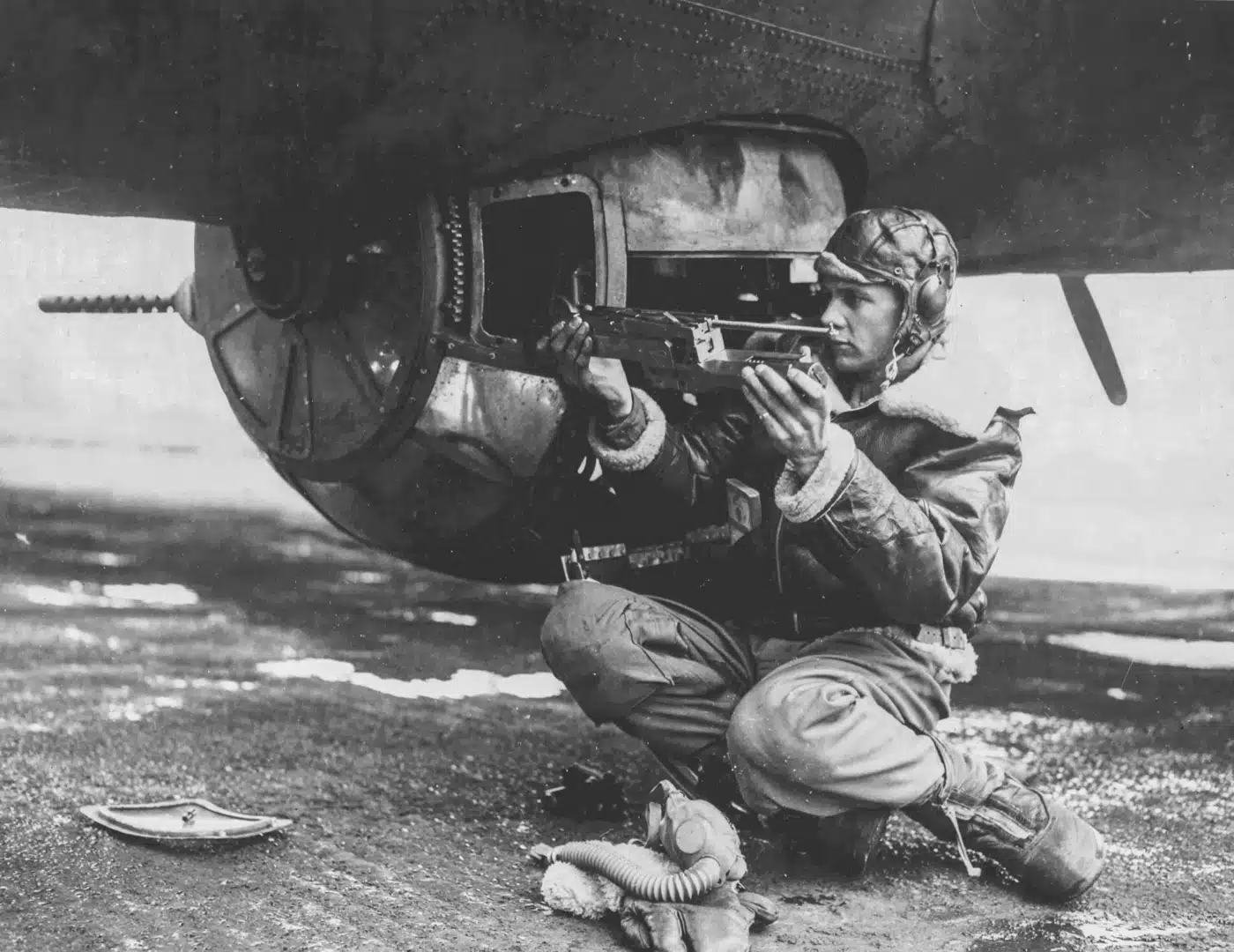
Early models revealed critical weaknesses. The B-17E, introduced in 1941, was the first truly combat-capable version, featuring a tail gunner position and doubled defensive armament. But the definitive model was the B-17G, entering service in 1943. This variant mounted thirteen .50-caliber machine guns, including a chin turret beneath the nose, to counter frontal attacks.
The brave crewmen manning these guns were highlighted in the HBO series Masters of the Air. One of our writers, Capt. Dale Dye (U.S.M.C., ret.) had a hand in training the actors portraying them.
Four Wright R-1820 Cyclone engines, each producing 1,200 horsepower, powered the aircraft to 25,000+ feet, carrying typical combat loads of 4,000 to 6,000 pounds of bombs.
The B-17’s reputation rested on survivability. Fortresses returned from missions with catastrophic damage — engines shot out, tail sections nearly severed, fuselages riddled with hundreds of flak holes. The aircraft’s rugged construction and redundant systems gave crews fighting chances even when things went terribly wrong. This resilience wasn’t just engineering — it was psychological. Crews believed the Fortress could bring them home, and that confidence mattered when facing flak and fighters at 25,000 feet over Germany.

Boeing produced 12,731 B-17s. The Eighth Air Force flew 290,000 sorties with Fortresses over Europe, dropping 640,000 tons of bombs. The aircraft participated in nearly every major strategic bombing mission from 1942 through 1945. While the B-24 actually outnumbered and outproduced the B-17, the Flying Fortress captured public imagination and became the enduring symbol of American airpower in World War II.
Consolidated B-24 Liberator: Extended Range
The Consolidated B-24 Liberator holds the distinction of being the most-produced American military aircraft in history. Consolidated, Ford, Douglas, and North American built 18,482 Liberators between 1940 and 1945. At peak production, Ford’s Willow Run plant completed one B-24 every 63 minutes. This mass-production capability exemplified American industrial might more than any other single aircraft program.

The Liberator’s Davis wing — a high-aspect-ratio design — provided superior range compared to the B-17. B-24s could reach targets 300 miles farther, making them essential for long-range missions. The Ploesti oil field raids in Romania, some of the most daring bomber missions of the war, required the Liberator’s extended range. In the Pacific theater, where distances dwarfed European operations, the B-24’s range advantage proved decisive.

But the Liberator had drawbacks. That efficient wing made the aircraft less stable as a bombing platform and harder to fly in formation. The high wing created a cramped bomb bay requiring a roller-conveyor system for bomb loading. More critically, the B-24 was more vulnerable to battle damage than the B-17. The wing’s structure and the aircraft’s generally less robust airframe meant hits that a Fortress might absorb could prove catastrophic for a Liberator.

Despite concerns about survivability, the B-24 served everywhere. In Europe, with the Eighth and Fifteenth Air Forces. In the Pacific, flying incredibly long missions against Japanese-held islands. Navy and Marine variants conducted anti-submarine warfare. The Liberator flew supply missions over the Himalayas — the famous “Hump” route to China. Its versatility and that extraordinary production capacity made it indispensable despite never achieving the B-17’s iconic status.
Boeing B-29 Superfortress: Most Advanced Bomber of the War
The B-29 Superfortress represented a technological leap beyond anything flying in 1944. Development began in 1940 with the Army Air Corps requesting a “hemispheric defense weapon” capable of striking targets 5,000 miles away. Boeing delivered an aircraft that was essentially a generation ahead — pressurized crew compartments, remote-controlled defensive armament, and performance capabilities that seemed almost science fiction.

Pressurization was the breakthrough feature. Forward and aft crew compartments, connected by a pressurized tunnel over the bomb bays, allowed sustained operations above 30,000 feet where crews worked without oxygen masks and weren’t incapacitated by extreme cold. Four Wright R-3350 Duplex-Cyclone engines — the most powerful production radials of the war at 2,200 horsepower each — drove the Superfortress to speeds exceeding 350 mph.
Those R-3350 engines plagued the program. Complex, temperamental, and prone to catastrophic overheating and fires, they required extensive development work. Engine failures destroyed numerous B-29s during testing and early operations. The program cost $3 billion, more than the Manhattan Project that produced atomic bombs, making the B-29 the most expensive weapons system of the war. Some considered it a boondoggle until it proved its worth over Japan.

Based initially in China and later in the Mariana Islands after their capture in 1944, Superfortresses could reach the Japanese home islands. Maj. Gen. Curtis LeMay revolutionized tactics in January 1945, abandoning high-altitude precision bombing in favor of low-altitude, nighttime incendiary attacks. The March 9-10, 1945, firebombing of Tokyo killed an estimated 100,000 people and destroyed 16 square miles — more destructive than either atomic bomb would be.

Live The Armory Life. The latest content straight to your inbox plus an automatic entry to each of our monthly gun giveaways!
The B-29 delivered both atomic bombs: “Enola Gay” and “Bockscar” dropped weapons on Hiroshima and Nagasaki in August 1945, ending the war. The Superfortress validated its original concept: America possessed an aircraft capable of striking strategically critical targets at intercontinental ranges. This capability fundamentally changed how nations calculated security and influenced Cold War nuclear strategy for decades.
Consolidated B-32 Dominator: The Forgotten Heavy Bomber
The B-32 Dominator remains the least-known American heavy bomber of World War II, overshadowed completely by its stablemate, the B-29. Consolidated developed the B-32 as a backup in case Boeing’s B-29 program failed — a reasonable precaution given the Superfortress’s troubled development. The Army ordered both aircraft, hedging against the possibility that the B-29’s advanced features might prove unworkable.

The B-32 shared the B-29’s size and basic mission profile but took a more conservative approach. Early designs included pressurization, but Consolidated deleted it when technical problems arose, reverting to conventional crew stations. The aircraft used the same Wright R-3350 engines as the B-29 but in a less ambitious airframe. This conservatism meant fewer development issues but also fewer performance advantages.
Only 118 B-32s were completed before the war ended. A handful deployed to the Philippines in mid-1945, flying combat missions against Japanese targets. These missions were largely uneventful — the B-32 performed adequately but offered no compelling advantages over the B-29. After Japan surrendered, the Army Air Forces immediately canceled the program and scrapped most B-32s.

The B-32’s historical obscurity reflects its limited impact. It was an insurance policy that never needed to be fully cashed in. The aircraft flew so few missions and left so little mark that many aviation histories barely mention it. Yet its existence demonstrated prudent planning — the Army Air Forces understood the risks of betting everything on the B-29’s advanced technology and maintained an alternative. That the alternative proved unnecessary doesn’t diminish the wisdom of having it available.
Legacy of American Bomber Operations
American bombers in World War II fundamentally transformed warfare. Strategic airpower emerged from a theoretical concept to a proven capability. The comprehensive bomber force, spanning light attack aircraft like the A-20 Havoc, versatile medium bombers like the B-25 Mitchell and B-26 Marauder, and heavy strategic bombers like the B-17, B-24, and B-29, demonstrated that air power could operate effectively at every level, from tactical ground support to strategic industrial destruction.
The aircraft themselves achieved varying degrees of fame. The B-17 Flying Fortress and B-29 Superfortress became cultural icons. The B-25 Mitchell earned legendary status through the Doolittle Raid. Others, like the B-24 Liberator, despite being the most-produced American military aircraft ever, remained relatively obscure. Some aircraft, like the B-32 Dominator and B-18 Bolo, left barely a historical trace. Yet each contributed to the overall air offensive that helped win the war.
For military aviation, World War II bomber operations established principles that persist. The need for air superiority before effective bombing campaigns, the importance of electronic warfare and suppression of enemy air defenses, and the value of precision-guided munitions; all trace their conceptual roots to lessons learned over Germany and Japan. Modern stealth bombers and cruise missiles represent technological evolution, but the strategic thinking derives from the same foundation.
The men who flew these missions deserve to be remembered not as abstract statistics but as individuals who faced extraordinary danger. A B-17 crew member in 1943 had roughly a one-in-four chance of completing their combat tour. Those odds were worse than those infantrymen faced in most World War II battles. Yet they climbed into those aircraft mission after mission, knowing the statistics, trusting their training and their crew.
American bombers in World War II represented more than machinery. They embodied national resolve, technological advancement, and the calculated application of industrial warfare. Understanding their role provides essential context for comprehending how the United States emerged from World War II as a superpower and how airpower shapes modern conflict.
Editor’s Note: Please be sure to check out The Armory Life Forum, where you can comment about our daily articles, as well as just talk guns and gear. Click the “Go To Forum Thread” link below to jump in!
Read the full article here
