

BESANÇON, France — France’s 7th Armored Brigade is experimenting with breaking up its armored platoons into smaller teams to be more discreet and offer less valuable targets on a drone-dominated battlefield, the unit’s commander said.
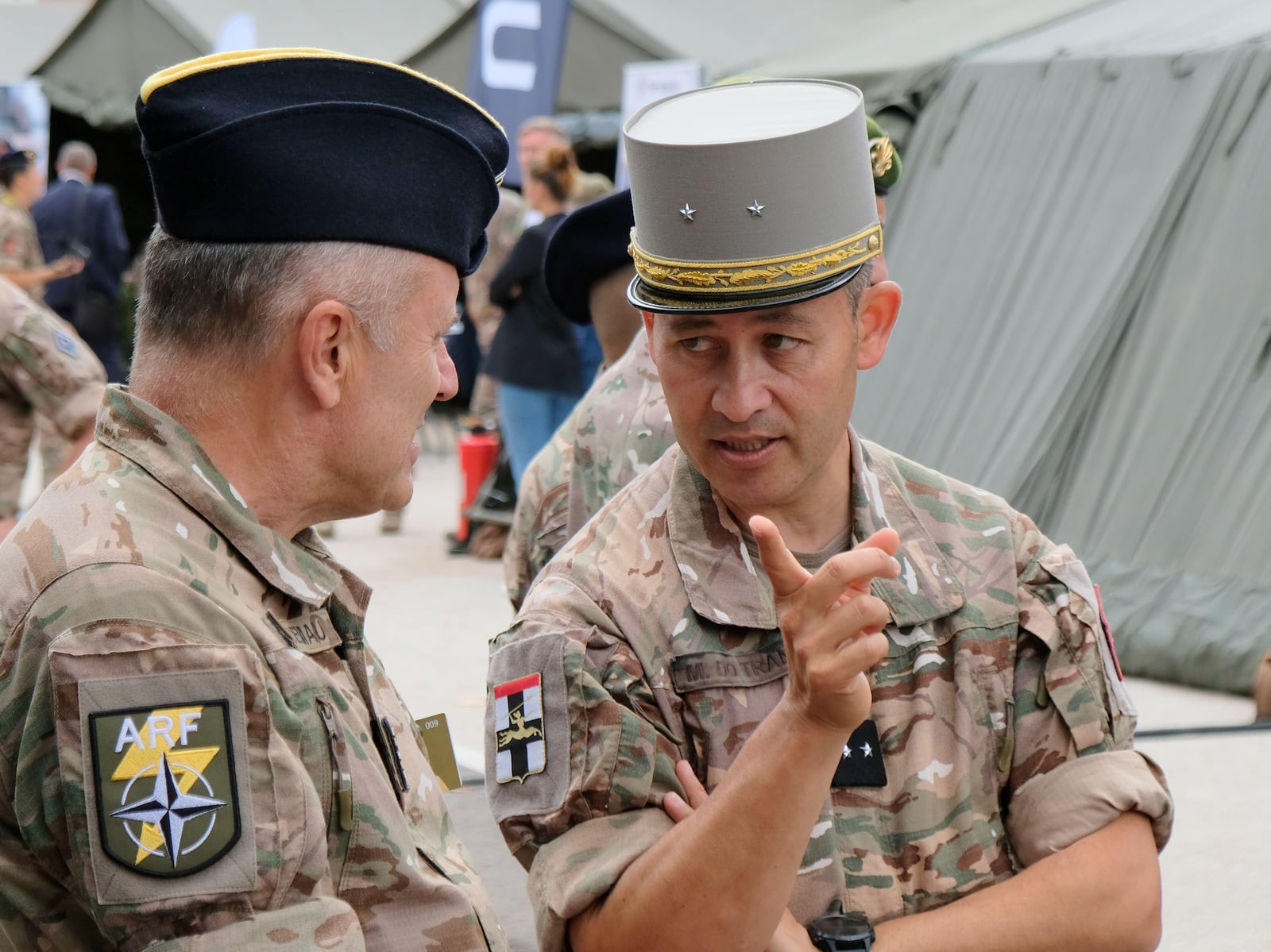
Whereas a French heavy cavalry platoon typically consists of four Leclerc main battle tanks and four VBL light armored vehicles, the brigade has been testing smaller units that can be combined “like Lego bricks,” Gen. Maxime Do Tran told Defense News last week at the brigade headquarters in Besançon in eastern France.
Drones have made armored maneuver more difficult in Ukraine, creating a heavily surveilled “kill zone” stretching kilometers from the frontline. Operating in smaller units reduces the risk of being targeted because an enemy might be less inclined to spend resources on just one or two tanks, according to Do Tran, who commands France’s flagship heavy armored brigade.
“The more insignificant you are, the less likely you are to be targeted,” Do Tran said at an innovation day on Sept. 9. “So it’s really about being as dispersed as possible.”
“Even if we’re spotted, even if there’s transparency on the battlefield, since we’re insignificant, ultimately it’s not worth the effort because we’re still talking about cost-effectiveness. It poses a dilemma to the enemy.”
RELATED
Elements of the brigade, known in French as the 7e Brigade Blindée or 7e BB, have been deployed to Romania, where France leads a multinational battle group.
Do Tran said he considers a basic brick of heavy cavalry to consist of a tank and a VBL, while an infantry brick might be made up of seven or more soldiers. The brigade found that the single-tank, single-VBL combo was too small to provide sufficient tactical coherence, and has gone back to two tanks and two light armored vehicles for now, according to the general.
“We maybe have to get away a little from this squadron structure,” Do Tran said. “If we want to perform a breakthrough maneuver, I don’t want to say, I need two or three squadrons. Maybe I need twenty bricks.”
The “brick” concept may require a change in military training to prepare small-unit commanders to operate with more autonomy, he said.
“A tank platoon in our doctrine consists of four tanks. In terms of doctrinal developments, why couldn’t it be one tank surrounded by three motorcycles and with drones overhead? Why couldn’t it be ten tanks if we want to break through?”
The 7th Armored Brigade’s heavy cavalry tested half-platoon operations during France’s Orion 2026 exercise earlier this year, mainly to assess the ability of non-commissioned officers to operate the concept, Do Tran said. The first challenge was to get NCOs to understand the commander’s intent and take the initiative without the lieutenant, he said.
“We haven’t yet reached the stage of full autonomy and differentiated missions being assigned to a half-platoon. But in terms of structure, we’re there.”
The peacetime constraints of Orion 2026 kept movement largely confined to roads rather than allowing armor to maneuver across fields, according to the general. He said that meant the brigade wasn’t able to fully practice force dispersion and force concentration as it would have liked.
The brigade did successfully test reducing the footprint of its command posts and streamlining information flow, including through graphical orders transmitted via data link, the general said.
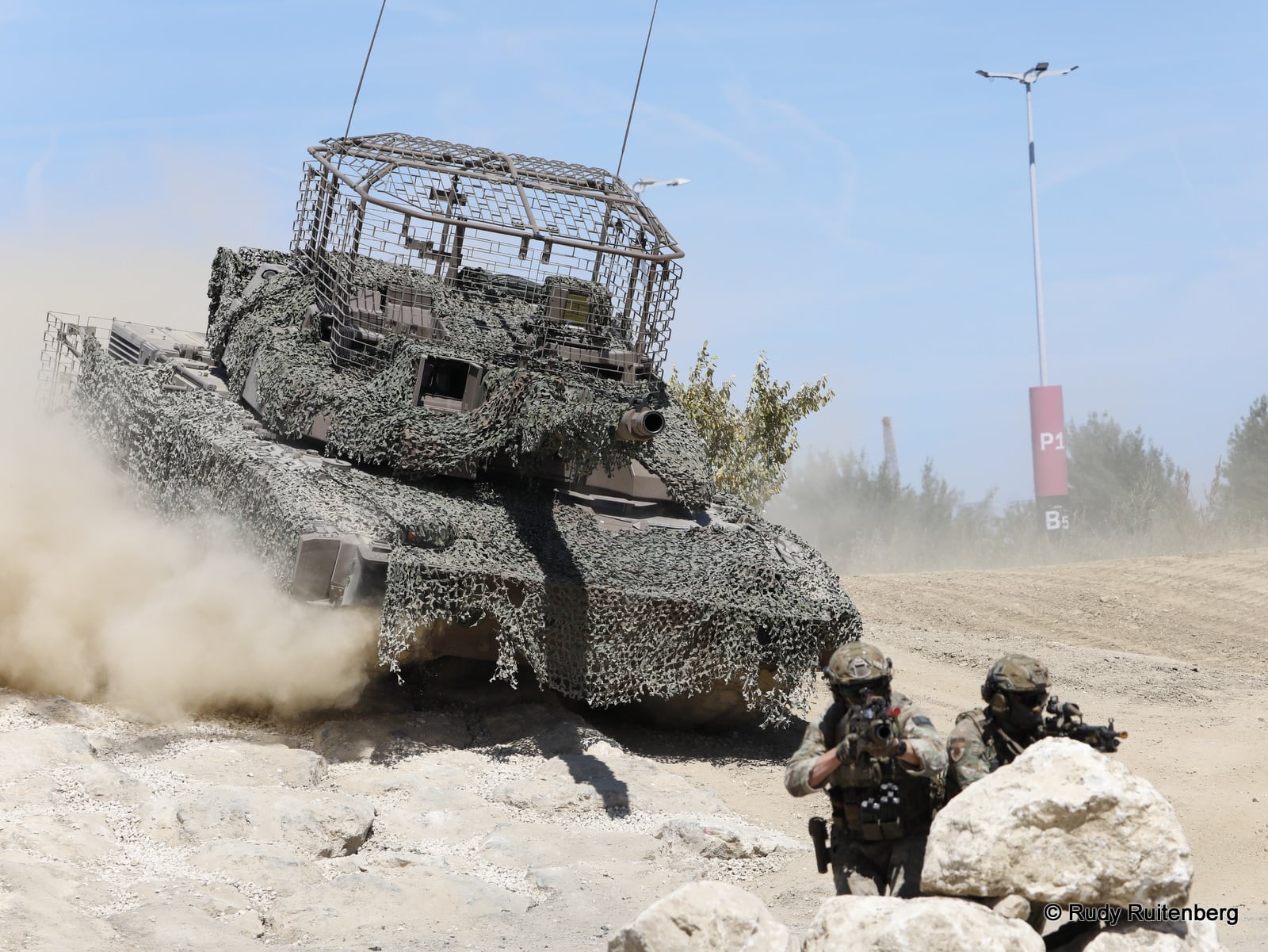
Do Tran said he has implemented the same concept of modularity to command, breaking up the command post into “five Lego bricks” that can all operate together or be completely dispersed.
The brigade commander said modularity is also something he’ll be looking for in a future tank, “a more open platform” where the main gun might be swapped out for a counter-drone system or drone launchers.
Firepower will sit mainly with artillery and drones, with the latter now almost equivalent to “flying bombs,” according to Do Tran. While direct fire hasn’t disappeared, “direct fire from one cannon to another, that maybe is disappearing,” and rather than a 120 mm or larger tank cannon, “why not a loitering munition?”
Tanks will continue to be needed to create tactical breakthroughs, even if movement has stalled in Ukraine for now, according to Do Tran. He said the French Army needs to retain the capacity to maneuver and exploit a breakthrough, whether obtained on the ground, in the air or through other means.
Rudy Ruitenberg is a Europe correspondent for Defense News. He started his career at Bloomberg News and has experience reporting on technology, commodity markets and politics.
Read the full article here
