

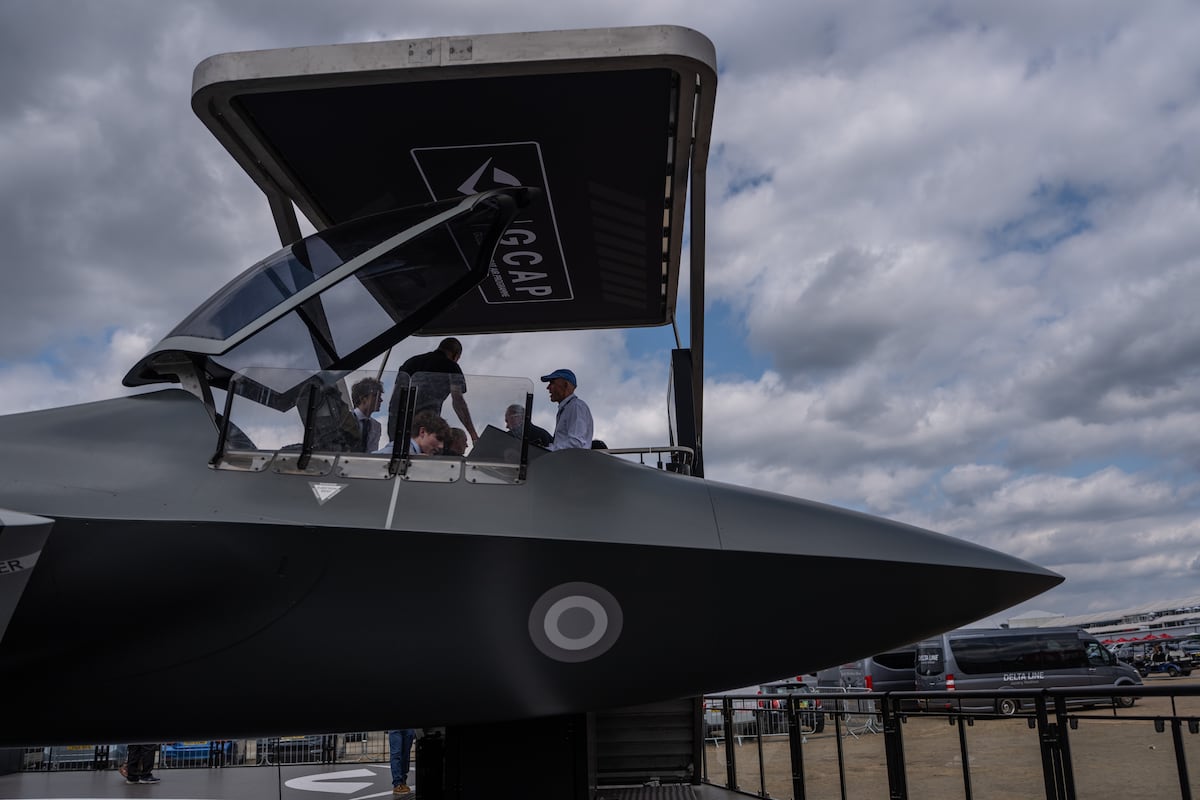
FARNBOROUGH, England — Britain’s new government secured an early defense win on Tuesday as Canada joined the delayed GCAP fighter jet program, part of a wider push by European allies to reduce their reliance on U.S. weapons and military technology.
The move coincides with the Farnborough Airshow, the aerospace and defense industry’s premier gathering, with wars in Ukraine and the Middle East driving demand for tools from combat drones and interceptor missiles to AI-enabled military software.
The airshow coincides with new Prime Minister Andy Burnham’s first days in office. He named John Healey, who favors hiking the UK defense budget, as finance minister, while giving Health Minister Wes Streeting the defense brief.
The appointments boosted British defense and aerospace stocks on Tuesday, as markets bet companies would benefit from the new government’s willingness to make Britain more war-ready.
“I’m looking forward to working with him in his new capacity,” Rolls-Royce CEO Tufan Erginbilgic told reporters at the show on Tuesday, referring to Healey. “He understands Rolls-Royce and our agenda and how much we contribute to the country.”
The new government’s first announcement with foreign partners came on the Global Combat Air Programme, the stealth fighter being jointly developed by Britain, Italy and Japan. Canada joined as an observer, marking the first expansion beyond the founding members.
BAE Systems, Boeing and Saab also signed a deal to advance a partnership to offer Britain a new fast-jet pilot training aircraft based on Boeing’s T-7 system, as it looks for a replacement for the aging Hawk fleet.
Defense sector signal
Healey had previously spent months lobbying the former prime minister to lay out a pathway to spend 3% of GDP on defense by 2030, rather than the 2.68% that the government eventually budgeted for.
“As Defense Secretary, John Healey championed British business, recognizing the contribution that the defense sector makes to growth and national security,” BAE Systems CEO Charles Woodburn said.
Canada is becoming an increasingly important defense partner for European nations as it looks to diversify its defense spending away from the United States and forge closer ties on the continent.
There will be no financial commitment involved in its observer status, but Canada could join the program more formally in future, sharing the billion-dollar development bill and potentially ordering the jets.
Defense companies made up half of a record 1,600 exhibitors at this year’s show, highlighting a shift from the usual dominance of commercial aviation and reflecting how conflicts have reshaped spending priorities.
Read the full article here
