

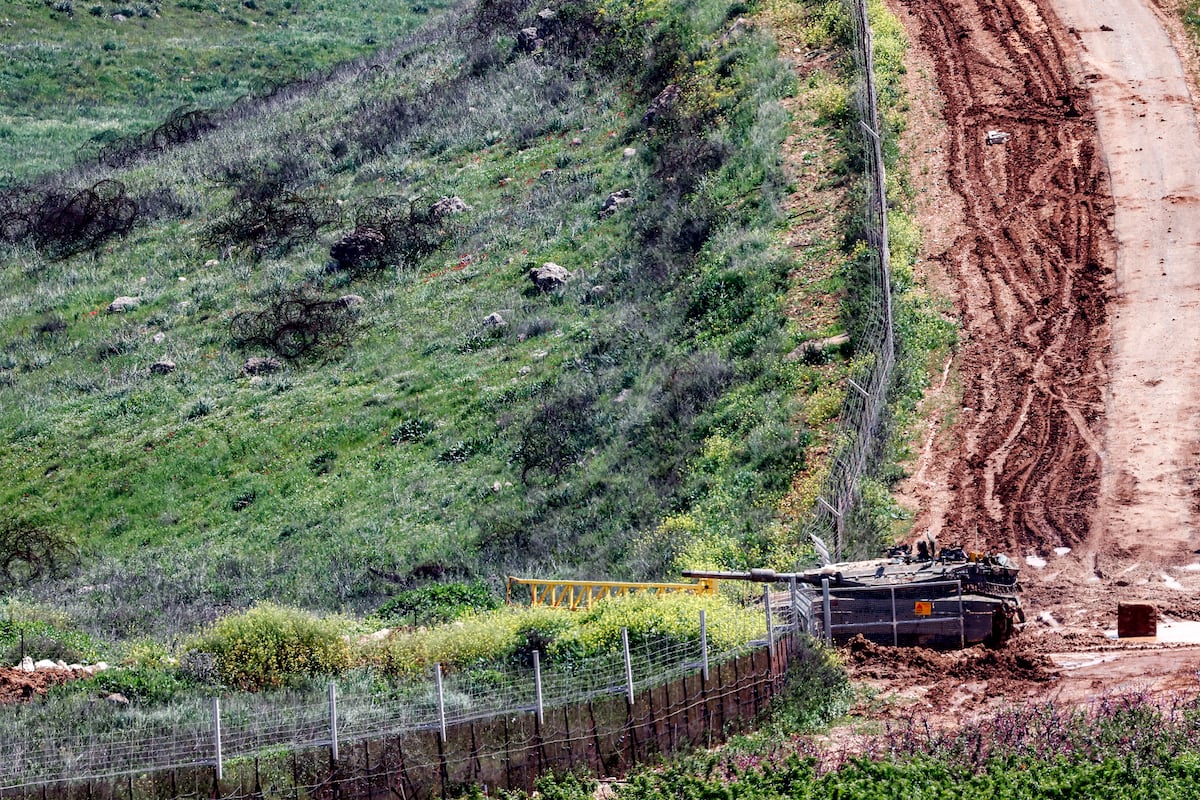
BEIRUT — The United Nations Interim Force in Lebanon, or UNIFIL, has entered the final months of its mission while operating in areas that remain under Israeli occupation.
Although its mandate expires at the end of the year, the future of the security arrangements in southern Lebanon remains highly uncertain, with multiple options still under consideration.
Part of UNIFIL’s international civilian staff was evacuated during the escalation of the conflict that reignited on March 2, while military personnel remained on the ground and continued operations.
“UNIFIL has a mandate until Dec. 31, 2026, and our mission will continue until then,” UNIFIL spokesperson Kandice Ardiel said.
While rumors, public statements and various proposals have emerged about next steps, no clear plan has taken shape.
On June 2, UN Secretary-General António Guterres submitted three options to the UN Security Council, all of which would significantly reduce the number of peacekeepers deployed in southern Lebanon.
Guterres outlined scenarios that would see a light, medium or more substantial presence, with troop numbers ranging from 900 to 1,500 or 3,000, alongside varying numbers of military observers and reserve forces.
However, the UN Security Council has yet to reach a decision and could ultimately opt for a course of action different from the three proposed alternatives.
“The Security Council is currently examining the options. We will wait and see what decision it makes,” Ardiel said. “For us, the priority remains continuing to implement our mandate, and creating the conditions for a smooth handover to whatever comes next.”
There is no timeline yet, but as the end date nears, the risk is that southern Lebanon will be left with a security vacuum.
The three options, meanwhile, are not the only proposals on the table. Over the past few months, several countries have expressed interest in maintaining an international presence in southern Lebanon.
Following a proposal by Italy and France to form a post-UNIFIL multinational coalition — put forward during the bilateral summit held in Antibes in late June — Germany was the last EU country to join the call for an EU force to replace UN peacekeepers in the border area.
The European External Action Service also proposed a three-year civilian and military mission, not as a replacement for UNIFIL but to strengthen the Lebanese authorities and the Lebanese Armed Forces (LAF) in enhancing territorial control and border security.
However, any scenario is further complicated by Israel’s continued presence in Lebanese territory and its ongoing military operations in border villages, despite the ceasefire currently in place.
UNIFIL and Resolution 1701, which brought an end to the 2006 Israel-Hezbollah war, have been largely absent from both the initial and now-defunct U.S.-Iran agreement, which included a ceasefire in Lebanon, and the security arrangements outlined in the framework agreement signed between Lebanon and Israel in Washington.
The framework agreement foresees the implementation of “pilot zones” in southern Lebanon that would be placed under LAF control and cleared of Hezbollah presence and weapons before the Israeli withdrawal, which would take place upon verification.
How such verification should be carried out remains unclear, while UNIFIL has not been brought into the discussion. So far, Israel has withdrawn from only one of the two agreed pilot zones. Israeli and Lebanese representatives are set to meet again in Rome on Aug. 4.
Regardless of outcomes, UNIFIL will cease operations on Dec. 31. As the mission’s mandate expires, the tasks outlined under Resolution 1701, including monitoring the cessation of hostilities and supporting the deployment of the Lebanese army south of the Litani River, will come to an end, even though the UN Security Council resolutions would technically remain in place.
On a practical level, this means UNIFIL will no longer be on the ground to monitor, report and coordinate daily between the parties, but will instead dismantle its bases and withdraw after nearly five decades of operations.
The Lebanese government has made no secret of its preference for maintaining an international presence along the border.
Officer-in-charge of the United Nations Special Coordinator to Lebanon (UNSCOL) Jean Arnault recently received a delegation representing 86 members of the Lebanese Parliament who signed a petition addressed to the UN secretary-general for the renewal of UNIFIL’s mandate, expressing their concerns about the consequences of the withdrawal.
According to Paul Salem, a non-resident senior associate at the Center for Strategic and International Studies and former president and CEO of the Middle East Institute, the Lebanese state and the LAF should be able to assume full responsibility instead of relying on an additional international force.
“The time to rely on others is over,” he said. “The LAF should be supported in gradually assuming full responsibility for security, not by bringing in another international force. They are certainly not ready yet, but that should be the end goal, rather than perpetuating the current model.”
According to Salem, from a realpolitik perspective, UNIFIL has not been particularly effective. At least half of the mission’s positions are currently located in areas occupied by Israel, affecting peacekeepers on the ground and delaying or blocking freedom of movement.
“Other countries should step in to support Lebanese authorities, not only the United States, but also the Gulf states, Turkey and Europe,” he concluded. “Everyone should help the LAF through training, resources, equipment and recruitment, rather than by maintaining a presence on the ground.”
Agnese Stracquadanio is a Middle East correspondent for Defense News. She has a background in writing and photojournalism, holds a master’s degree in international relations, and previously worked for Reuters.
Read the full article here
