

As demand surges for one of the military’s most in-demand missile interceptors, the Navy is preparing to bring it to sea.
The service plans to integrate the PAC-3 Missile Segment Enhancement interceptor into its Aegis Combat System for the first time, Lockheed Martin announced in a Tuesday statement, as demand for the missile grows and the Pentagon expands production.
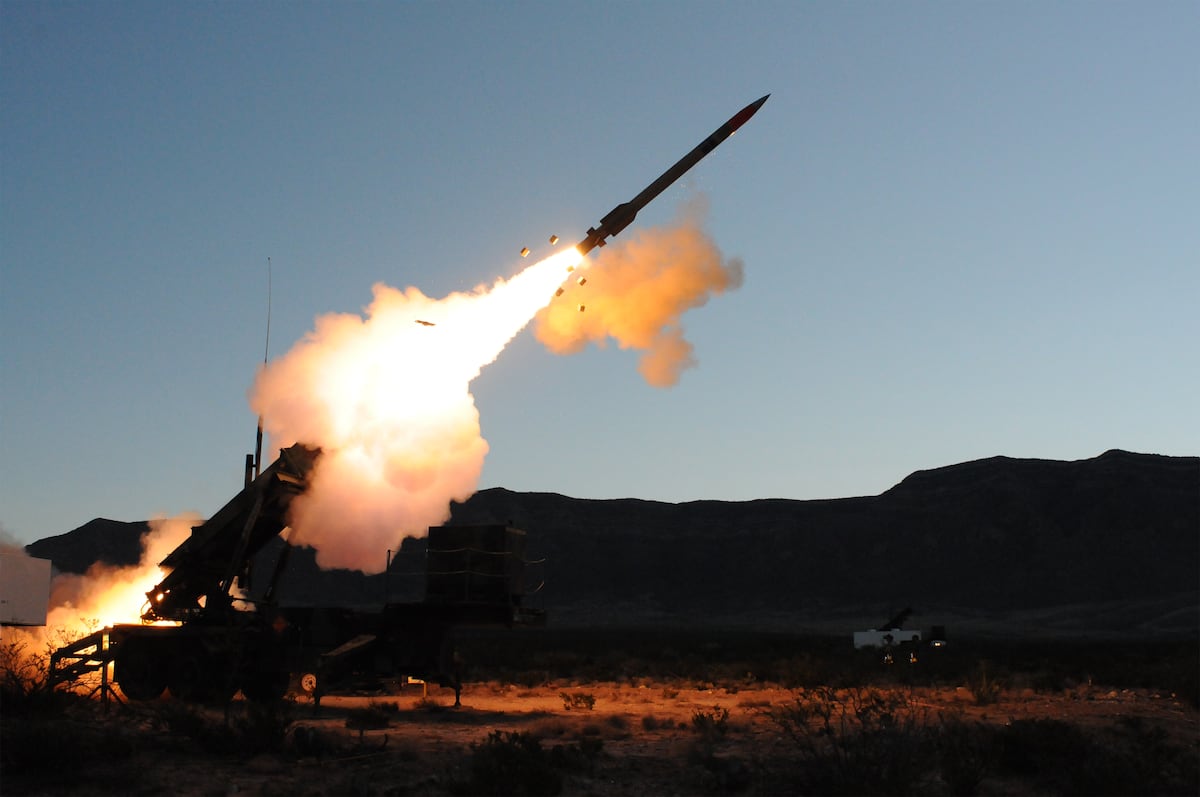
The Army uses the interceptor missile, known as the PAC-3 MSE, in its Patriot air defense system, and the move will bring the interceptor aboard the Navy’s ships for use within the Aegis system to detect and intercept incoming aerial threats.
The Aegis is an automated naval weapons system incorporated onto destroyers and cruisers that uses an advanced radar system to identify and track and then guide missiles like Standard Missile surface-to-air weapons. It can track over 100 targets at a time.
Now, Lockheed Martin has been awarded a “multi-million” dollar contract to incorporate PAC-3 MSE missiles into the system, according to the company’s statement. It did not specify a specific dollar amount or timeline for the testing or integration.
“This integration further expands the capability of Aegis to engage missile threats at multiple layers, enabling a more comprehensive and effective defense against evolving threats, ensuring the warfighter has the strategic advantage,” Chandra Marshall, the vice president of the company’s multi-domain combat solutions, said in the statement.
The planned integration comes as the Department of Defense has ramped up production of PAC-3 MSE interceptors under a $4.7 billion dollar contract with Lockheed Martin that would up annual production from around 600 to as many as 2,000 interceptors over the span of seven years.
Recent contract announcements — including one from Boeing, which manufactures the interceptor’s PAC-3 seekers — come as the U.S. military’s reliance on expensive interceptors against cheap munitions, particularly those deployed by Iran during Operation Epic Fury, has come under heightened scrutiny.
PAC-3 missiles have an estimated price tag of $4 million and compared to Iranian Shahed drones, which cost around $35,000, the cost ratio heavily favors Iran.
The interceptor missiles work by colliding with incoming threats in flight, using a hit-to-kill approach instead of exploding. They are guided by onboard sensors to engage targets like ballistic or cruise missiles at a high speed.
The PAC-3 MSE is an upgraded version of the interceptor, with an extended range.
The missile interceptor is “combat proven” when used against ballistic missiles, cruise missiles and hypersonic and airborne threats, Lockheed Martin said in the statement.
Eve Sampson is a reporter and former Army officer. She has covered conflict across the world, writing for The New York Times, The Washington Post and The Associated Press.
Read the full article here
