

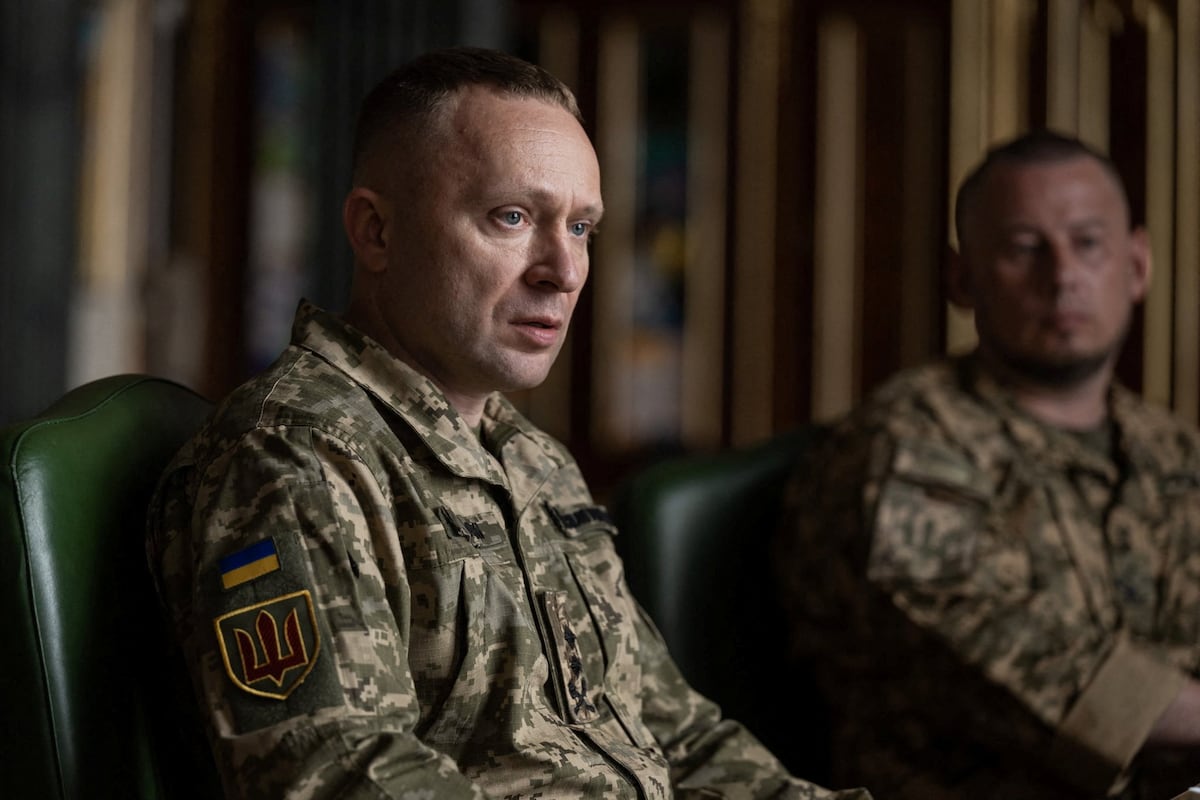
KYIV, Ukraine — Ukrainian President Volodymyr Zelenskyy replaced his top general Tuesday, naming Maj. Gen. Mykhailo Drapatyi commander-in-chief of Ukraine’s armed forces and pushing out Gen. Oleksandr Syrskyi after days of nationwide protests demanding Syrskyi’s removal over the rift that cost Defense Minister Mykhailo Fedorov his job a week earlier.
Drapatyi, 43, is widely seen as a reform-minded, soldier-first commander whose habit of owning failures in public made him the counterweight to Syrskyi’s centralized, old world style.
Protesters have chanted his name nightly along with the names of a handful of other popular commanders for the past week as anger over Fedorov’s removal has grown.
“It has been decided that Mykhailo Drapatyi will become the new Commander-in-Chief of the Armed Forces of Ukraine,” Zelenskyy wrote on social media Tuesday, shortly before midnight.
“It is a fact that Oleksandr Syrskyi ensured Ukraine’s success in defending Kyiv, in the Kharkiv offensive operation, and in the Kursk operation,” he wrote. “I am grateful to Oleksandr Syrskyi and every one of our soldiers for their strong positions on the front lines. I am grateful to Mykhailo Drapatyi for his vision.”
“I thank the President of Ukraine for the trust, the Minister of Defense for the support, and the Defense Forces for a new stage of service,” the new CIC wrote on Facebook in response. “I will work responsibly, focused and with respect for the people who are defending our state today.”
Last week, Drapatyi shared support for Fedorov and reform in the military administration. “The military needs change, but without justice, no change will make sense to the people who carry this war on their shoulders every day,” he wrote.
“A commander has no right to remain silent about problems, especially when their cost is measured in lost opportunities, time, and human lives,” he added.
Fedorov welcomed the replacement, calling it “a new era and a new hope in the fight of free people for freedom and justice” on social media just minutes after Zelensky shared the long-awaited update.
In naming a commander widely seen as a reformer, Zelenskyy has answered a war-weary nation and may have defused the gravest domestic crisis of his wartime presidency, even as the fate of Fedorov, the ousted minister the protests began over, remains unsettled.
“Removing Fedorov = helping the Russians”
It began as a cabinet reshuffle.
When Prime Minister Yulia Svyrydenko stepped down at Zelenskyy’s request early last week, the move dissolved the government and forced the reappointment of every minister.
By Wednesday, it was clear Fedorov would not get his job back.
The backlash was immediate.
Col. Pavlo Yelizarov, the deputy commander of Ukraine’s air force who helped oversee the country’s defense against Russia’s nightly missile and drone barrages, resigned in protest on Thursday, writing in a Facebook post that Fedorov’s removal was “a great evil for the country’s defense capability.”
The same day, Serhii Sternenko, the drone-crowdfunding activist Fedorov had made his adviser on drone warfare, quit too.
“A lot of things did not work out, including due to bureaucratic obstacles and artificial delays on the part of those who are hindered by army reform,” he wrote on X.
Protests against the shake up erupted across the country that afternoon, spreading to more than a dozen cities and drawing thousands of people wielding signs with slogans such as “Removing Fedorov = helping the Russians” and “Don’t change what works, change for the better.”
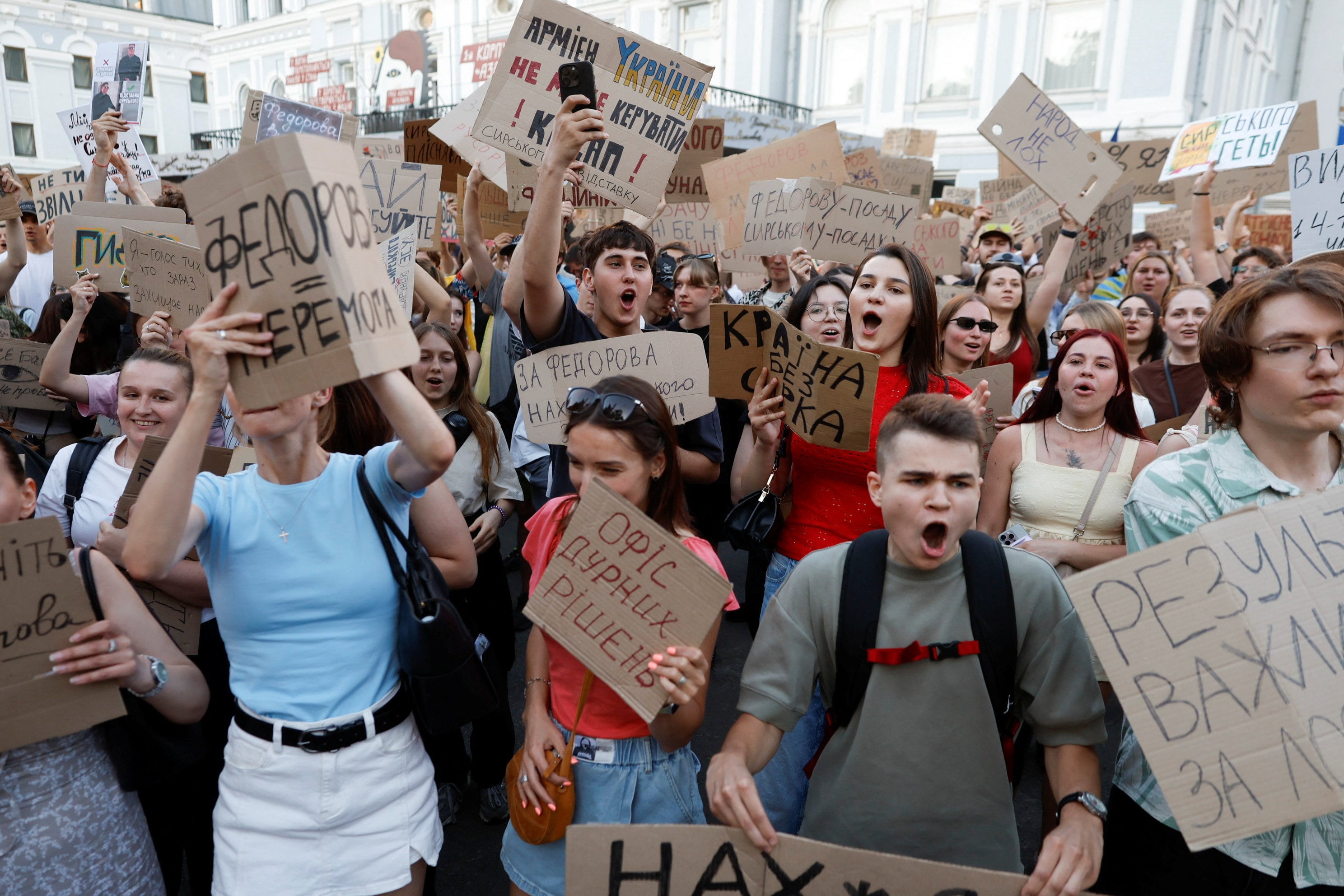
Overnight, the protests became one of the largest public demonstrations since Russia launched its full-scale invasion of Ukraine almost five years ago, second only to the anticorruption gatherings that swept the nation last summer.
While Thursday’s demonstrations began as a call to reinstate Fedorov, they broadened rapidly to include a parallel demand for the removal of Syrskyi — once the commander’s role in the former defense minister’s ousting became known.
Zelenskyy ultimately said the firing was catalyzed by a feud he could no longer manage.
“There is a difficult dialogue between the military leadership and the Defence Ministry,” he told journalists on Thursday. “It is difficult on different levels, by the way. It is not just about individuals.”
The political clash between Syrskyi and Fedorov comes to a head
The rift pitted the military’s old school against its modernizers: a Soviet-trained general running the war through a rigid chain of command, and a tech minister who built his career on digitizing the state.
Syrskyi, commander-in-chief since February 2024, organized the defense of Kyiv in the war’s opening weeks, the rapid 2022 Kharkiv counteroffensive and the 2024 incursion into Russia’s Kursk region.
But reformers faulted him for a top-down command culture inherited from the Soviet era, and some troops call him “the Butcher” over the cost of holding the city of Bakhmut.
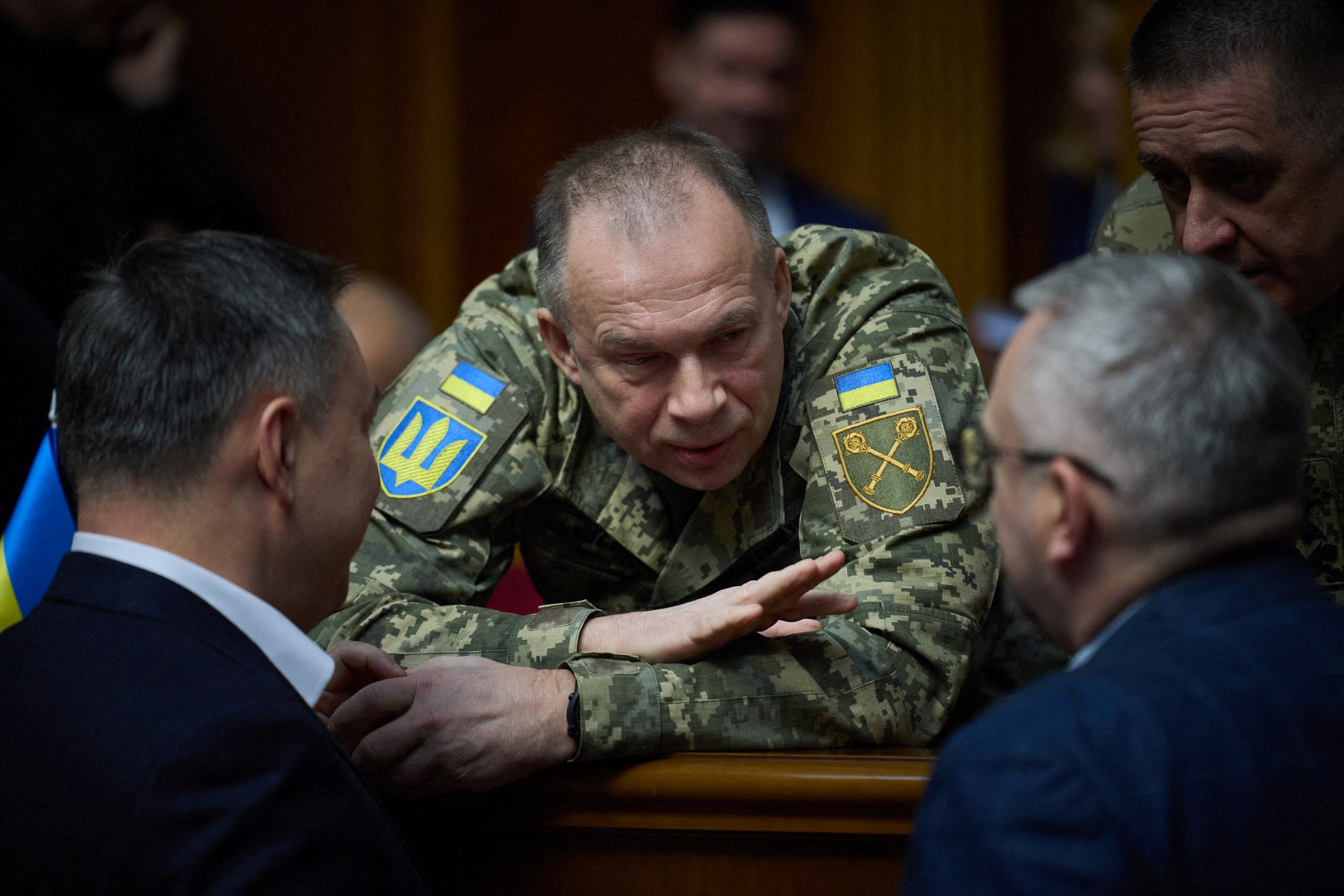
Syrskyi responded to the political turmoil and growing accusations against his fitness for office in an op-ed in Ukrainian outlet Militarnyi on Monday.
He rejected the charge that he resisted embracing drone warfare and noted that he formulated Ukraine’s dedicated Unmanned Systems Forces as a separate military branch to formalize the tech’s importance in the war today.
He also apologized to Fedorov, saying he was “surprised to learn” the two had a conflict and that he had “perceived our relationship as a working one: with complex issues, with different positions.”
“If I offended anyone: Mykhailo Albertovich, I’m sorry. I can be harsh,” he said. “But I ask you, and everyone who is following this story with enthusiasm: let’s focus not on the personal, but on the global. On victory.”
As defense minister since only January, Fedorov oversaw Ukraine’s expansion of drone and deep-strike operations, and a war-weary public embraced the technology as its best edge against a much larger enemy.
In an independent public opinion poll conducted by international firm Gradus Research on July 16–17, found that over 60% of Ukrainians opposed Fedorov’s removal, and nearly half said they believed his ousting would weaken the country’s defense.
Fedorov is known for moving fast and iterating often.
When the reshuffle cost him his job, Fedorov preempted the president’s office by announcing his own exit and then laying out the fight behind it in a rare public airing of the government’s infighting under martial law.
Then, at a press conference the day after his firing, he said his reforms had run into “a complete blocking” by the military leadership, and that Zelenskyy had forced a choice between him and the commander.
“Instead of thinking about how to defeat Russia asymmetrically, [Syrskyi] figured out how to split the country,” Fedorov said at the event, hours before the first protesters entered city squares.
“The Flying BMP”
Drapatyi has built the opposite reputation to his predecessor, becoming generally well-liked among soldiers and civilian personnel alike for his dedication to his troops and his willingness to learn and adapt while leading under the most difficult of circumstances.
Others knew him as “The Flying BMP.”
A video of the major general plowing a blue-and-yellow-flagged BMP through a Russian roadblock during Moscow’s temporary occupation of Mariupol in 2014 went viral shortly after the city’s liberation for its brazen success. The video quickly becoming a meme for determination at all costs — and tacit understanding for Drapatyi’s own stubborn fortitude.
A career tank officer with more than two decades in uniform, he was promoted to command the Ground Forces in November 2024.
In that role, he oversaw the newly formed 155th Mechanized Brigade, also known as the “Anne of Kyiv Brigade,” that became the first Ukrainian brigade trained and equipped completely by a Western ally — and that became infamous for being hit by mass desertions before it was even fully deployed.
Drapatyi admitted that the failures of the 155th came from Ukraine’s own recruitment and training, not the French exchange program, and pushed for reforms across the military establishment as a result.
His tenure hit its biggest and final challenge later that year, when a Russian Iskander missile struck a training ground in Dnipropetrovsk Oblast, killing 12 soldiers and wounding more than 60.
Russia had been hitting rear training grounds all year, killing troops far from the front and forcing negligence investigations into why they were still massed in the open, according to the Kyiv Independent.
Although the Ground Forces command reported that most personnel had reached shelters and that no troops were massed in formation, the official account failed to adequately explain how — if the troops were securely in their bunkers — so many could be killed.
Drapatyi took responsibility for the deaths, saying his orders to disperse and take shelter were not carried out, making him an ineffective leader. He resigned as Ground Forces commander.
“An army where no one is responsible for the losses is dying from within,” he said at the time.
Zelenskyy rejected the resignation and refused to let him leave the military, instead moving him out of the Ground Forces within days into the reconfigured Joint Forces Command, a step framed as allowing him to focus on frontline operations.
There, units like the well-known Khartiia Brigade retook ground around Kupiansk, according to Euromaidan Press.
Just six months later, his standing had grown to the point that protesters across the country were chanting his name in the week before his appointment, often right alongside Fedorov’s.
Fedorov’s fate still unknown
Fedorov welcomed Drapatyi’s appointment as “a voice of change that could not be ignored,” adding that he had also called Syrskyi to thank him for defending Ukraine.
Where Syrskyi goes next is uncertain.
“My job is war. Strategy, front, people,” he wrote in Monday’s column. “This is what I do and will continue to do.”
Fedorov’s fate also remains unknown.
He has said he will return only as defense minister, and he turned down another post, one focused on military technology and modernizing the ministry, according to the anonymous sources speaking to Kyiv Independent.
Zelenskyy said Tuesday that he would formalize Drapatyi’s appointment Wednesday, and that more decisions were still to come.
Fedorov, for his part, is waiting.
“We need to move even faster and write new chapters, correcting all previous mistakes,” Fedorov said after Drapatyi’s appointment.
Read the full article here
