

If you’re not a subscriber to our weekly newsletter, Soldier Systems Digest, you missed this entry form last week.
The US Army has a long history of small units organized for deep reconnaissance. During the Vietnam War each Division along with a few other units had Long Range Reconnaissance Patrol Companies. Eventually they were reflagged as Companies within the 75th Infantry Regiment for lineage purposes. After the war, these units were deactivated.
Despite reconstituting the 1st Bn, 75th Infantry and eventually the 2nd Bn not long after the conflict as the world’s premier light infantry, GEN Creighton Abrams did not organize Divisional LRRP elements. This led to the Divisions creating provisional units out of hide.
One such organization was the 3rd Infantry Division Recon Company. Former member Nathaniel Collins offers a brief history of the unit.
“3rd Recon Company started up around April of 1982 as a off the books, strictly volunteer platoon size element stationed in Gieblestadt, Germany. They were tasked with testing the effectiveness of a long range reconnaissance unit in Europe since all the other NATO allies were employing such tactics. The concept was tested in Reforger of ’82 and widely considered a huge success. The 82nd Airborne Div command was so impressed that they stated that upon return to state side they were going to begin the process of developing such a unit for the 82nd. The platoon was then recognized as an official unit at the company size level with two reconnaissance line platoons and a HQ platoon.”
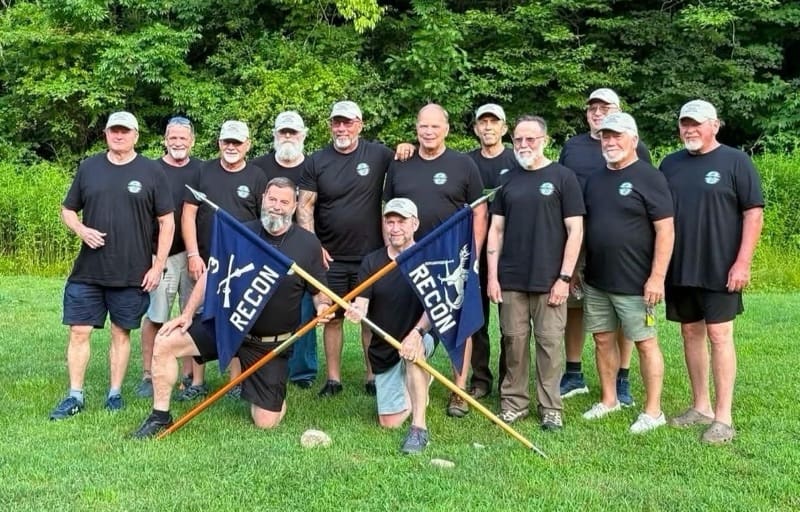
Here is a photo from a recent unit reunion.
Earl Corp added some details on the lineage of the unit which I will expand upon, “3rd Infantry Division Reconnaissance Company, we were in Germany from 1982-85 then were converted to E Troop 3/7 Cav. The unit evolved into 3rd ID LRSD.”
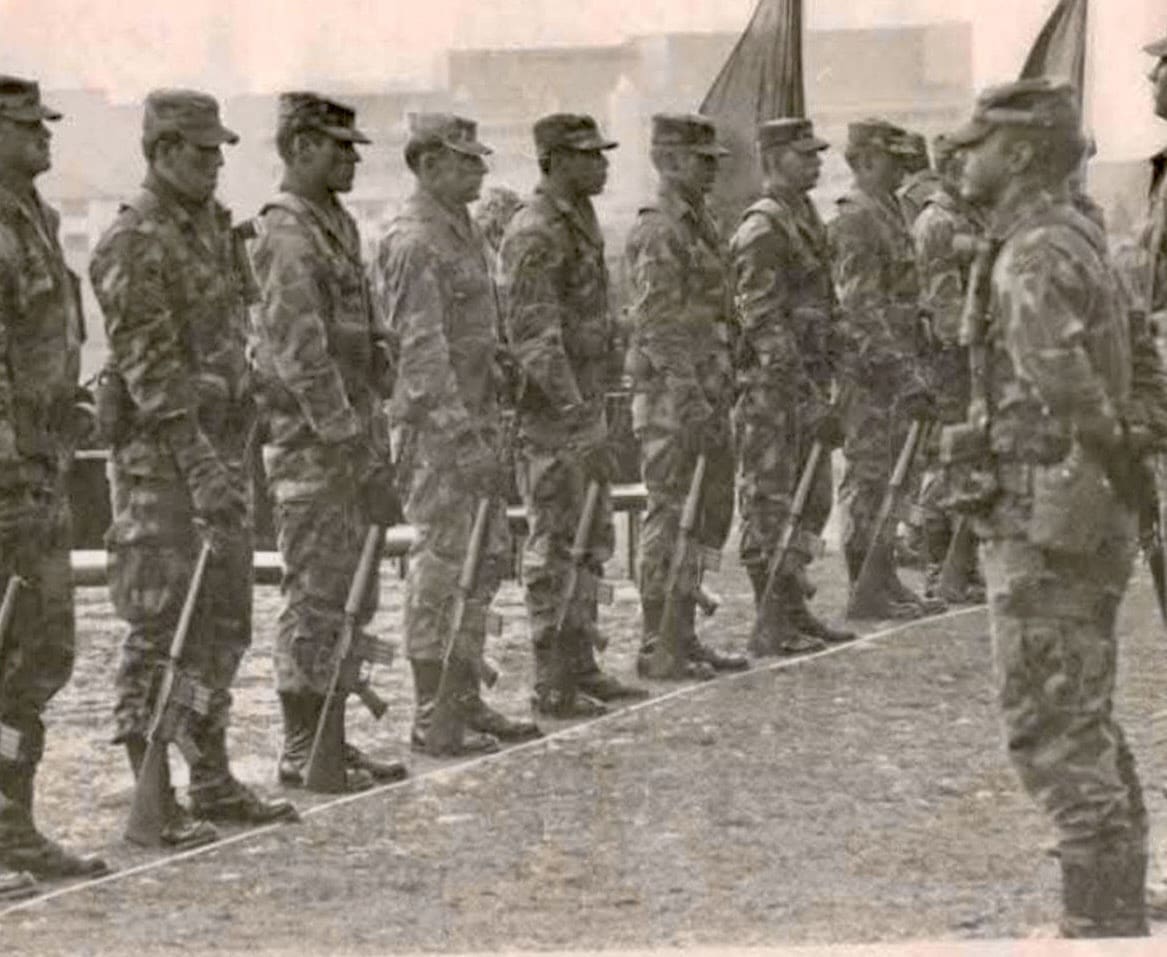
Below is an image of the unit.
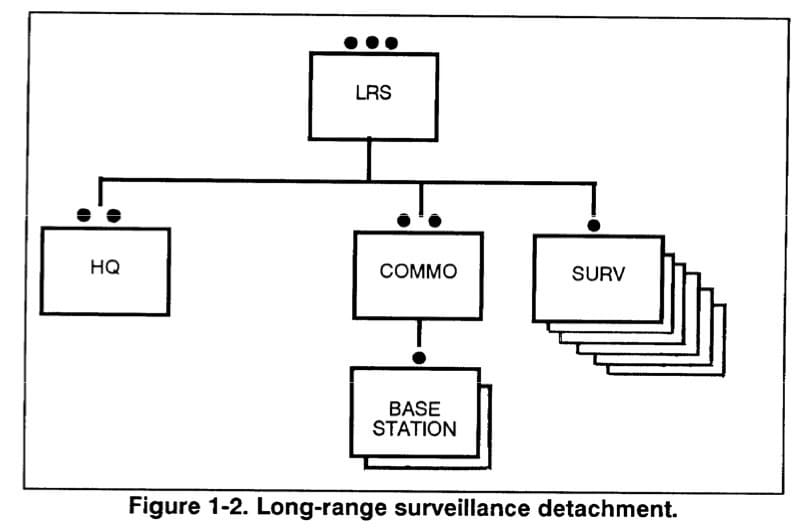
By the mid-80s, the Army had embraced the Long Range Surveillance concept with a LRS Detachment at each Division and a Company at each Corps. E/3/7 was the 3ID LRS Detachment. Initially, the Dets were assigned to Divisional Cavalry but since they were a deep reconnaissance asset they were moved to the Military Intelligence Battalions.
This is where I come into this story. Despite being a Crypto-linguist, I was assigned to D Co (LRS), 103rd MI Bn (CEWI) from 89-90 after having served in A Co (Collection & Jamming) during 1988. The short version of the story is that my 1SG, Cliff Lynch (later INSCOM CSM) was a former infantryman and my Bn CSM was an Infantryman. I spoke with the LRSD CO who was like me from Iowa, and the SNCOs in my support chain. They made it happen so I could try out. I was accepted into the Det and served in the Communications Section where I leaned about HF communications and patrolling. I brought translation skills in German and French.
The table of organization and equipment called for Light Infantrymen (11B) and 31C / 31V (Single Channel Radio Operator & Tactical Communications Systems Operator/Mechanic).
While there weren’t a lot of us who were not either of those MOS, there were quite a few a few 11H and 11M (TOW Gunners & Bradley Infantrymen) due to the scarcity of Light Infantry in Germany. While I was there, we also had an artilleryman and a light wheeled vehicle mechanic. I believe the openness to accepting nontraditional MOSs into the detachment came from the unit’s initial founding as a provisional unit. If you were the right Soldier for the job, the Detachment would take you.
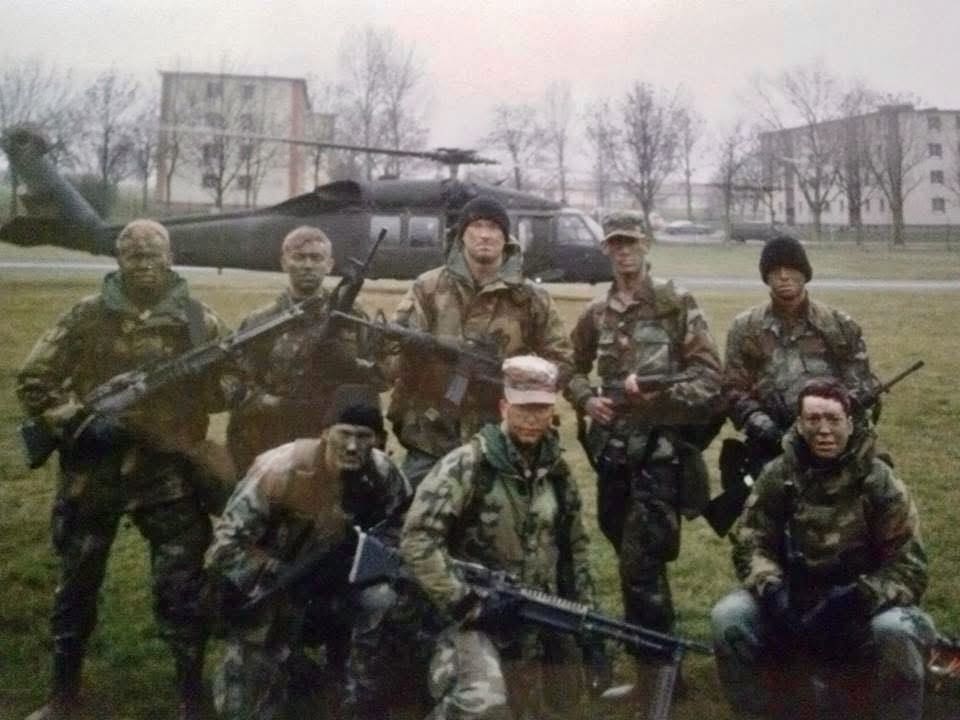
Serving in LRS is one of the best jobs I’ve ever had in the military and helped me grow professionally as an NCO as well as tactically and technically; skills I applied in my next assignment as a SOT-A member in 3rd Group. I’m in the photo above with other Commo Section troops getting ready to infil on a patrolling exercise in early 89. The Detachment’s two Base Radio Sections had an M-60 assigned.
While the units were all designated as Airborne, only the two Corps LRSCs were on jump status in Europe. Divisional Detachments were not placed on jump status due to a treaty on offensive forces in Europe. However, all other LRSD across the Army were on jump status, even in the heavy divisions. Likewise for the Corps LRSCs.
The US Army deactivated its active duty LRSUs in September, 2005 although Guard Detachments soldiered on until 2017.
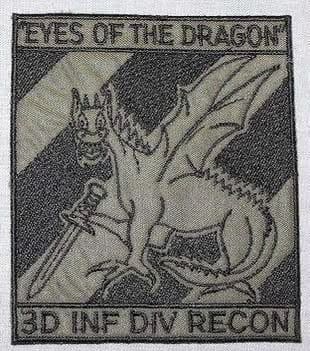
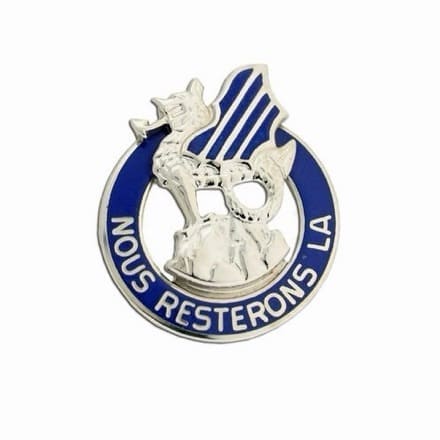
As an addendum, I’d like to point out that the motto seen on the morale patch dates from the early 80s and was still used by the Detachment while I was assigned there at the end of the decade despite it being reflagged twice. It stems from the Wyvern, a form of a dragon, that is found on the Marne Division’s Distinctive Unit Insignia or unit crest. We were its eyes, deep in the enemy’s rear area.
Eric Graves
Founder, SSD
If you’d like to subscribe:
You can skip to the end and leave a response. Pinging is currently not allowed.
Read the full article here
