

President Donald Trump’s nominee to lead the Cybersecurity and Infrastructure Security Agency privately told stakeholders he left his role in the U.S. Coast Guard to address concerns about his ties to shipbuilding work that led a Republican lawmaker to place a hold on his nomination late last year.
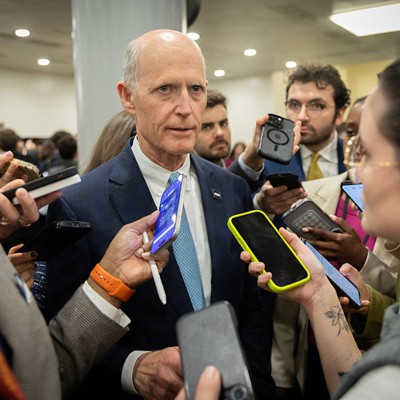
Sean Plankey told several peers this week that he wrapped up his time at the Coast Guard to show Sen. Rick Scott, R-Fla., that he is no longer involved in shipbuilding contract work and that there would be no reason for Scott’s office to place a hold on his confirmation in the Senate, according to two people familiar with the matter.
The people requested anonymity to discuss the specifics of private conversations concerning Plankey. He left the Coast Guard this week, where he had served in an advisory role for about the past year, Nextgov/FCW and Defense One first reported.
In a written statement, Plankey confirmed his intentions and said he “is focused on his CISA nomination” and “prepared to lead the nation’s cyber defense agency to protect the federal civilian networks and our nation’s critical infrastructure from physical and cyber attacks.”
He also said that he “led the unprecedented turnaround of the U.S. Coast Guard, a 14B/year, ~60K people organization in its worst readiness and leadership crisis since WW2 to deliver historic recapitalization and operational success.”
Scott put a hold on Plankey in December. It was unrelated to cybersecurity and involved the Department of Homeland Security scaling down a Coast Guard cutter contract with Eastern Shipbuilding Group, which is based in Florida, three people familiar with the matter previously said.
Nextgov/FCW has asked Scott’s office for comment.
In the latter part of Trump’s first term as president, Plankey served as principal deputy assistant secretary for the Energy Department’s Office of Cybersecurity, Energy Security and Emergency Response. Prior to that, he served as the director for maritime and Pacific cybersecurity policy at the National Security Council and also held leadership roles at U.S. Cyber Command.
Last week, CISA’s then-acting director Madhu Gottumukkala was moved to another role in DHS, while Nick Andersen — the previous executive assistant director for the cyber division — took his place helming the agency in an acting capacity. Gottumukkala was moved after he became the subject of several unflattering media reports in recent months.
Funding for DHS has been lapsed for around two weeks without a clear indication that lawmakers are ready to reconcile on a deal. The war in Iran, which broke out Saturday, is expected to test U.S. cyber defenses, which have been impacted in the last year by significant workforce cuts at CISA and other key cyber units across the government.
Plankey’s path to confirmation is still unclear. On Tuesday, Sen. Thom Tillis, R-N.C., threatened to slow all Senate proceedings if Homeland Security Secretary Kristi Noem didn’t soon address inquiries from his office regarding immigration enforcement operations and disaster response funding in his state.
“If I don’t get an answer that you’ve had a month to respond to, and the remaining ones … as of today, I’ll be informing leadership that I’m putting a hold on any en bloc nominations until I get a response, and in two weeks, if I don’t get a response, I’m going to deny quorum and markup in as many committees as I can until I get a response,” Tillis said in an oversight hearing of DHS activities.
Read the full article here
