

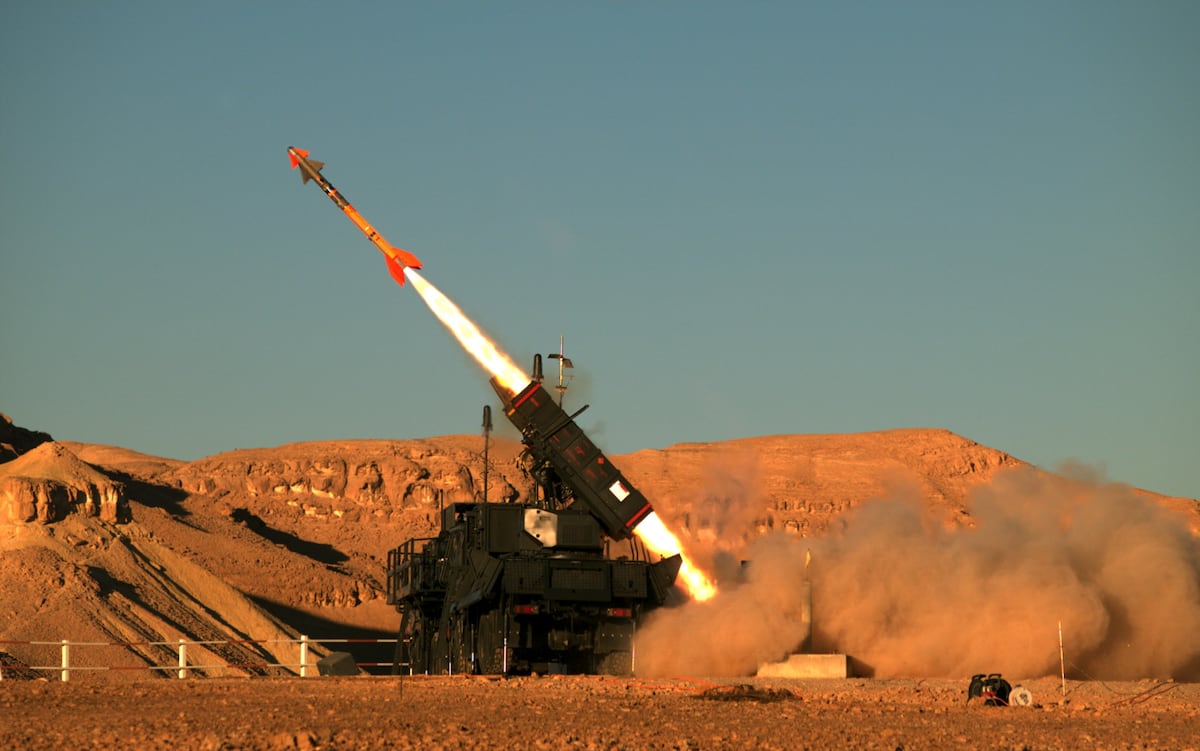
JERUSALEM — Israel is on tap to sell Spyder air defense systems to Romania for approximately €2 billion, or $2.3 billion, according to a June 28 Rafael Advanced Defense Systems announcement.
The deal includes the supply of launchers, interceptors, radar systems, training programs and logistical support.
The Israeli company said a first order under the full framework agreement was signed last week. Delivery of the systems is expected to begin within 36 months of the signing date, while “achieving initial operational capability based on extensive industrial cooperation and local manufacturing in Romania,” a Rafael statement reads.
The company also notes that the latest deal is the largest contract in its history. The sale comes amid rising tensions in Europe due to the Russia-Ukraine war, which also posed a challenge to the Eastern European NATO member that suffered several incidents of crashing drones as a result.
The latest occurred at the beginning of June, when Romania reported that a drone exploded in its port city of Constanța, and about a week prior, a Russian drone hit a residential building in the city of Galați, near the Ukrainian border.
The Spyder sale was made possible after Rafael won the Romanian Ministry of Defense’s tender for air-defense systems capable of intercepting drones, cruise missiles, guided munitions, airplanes and helicopters.
The Spyder is a mobile air defense system developed based on the company’s air-to-air missiles: the radar-guided Derby, and the heat-seeking Python 4 and Python 5, combined with MMR radars manufactured by Israel Aerospace Industries.
According to the company’s website, the system is capable of launching up to four interceptors simultaneously, reaching a maximum range of 40 kilometers (25 miles) and a maximum interception altitude of 12 kilometers (7 miles).
Tzally Greenberg is the Israel correspondent for Defense News. He has experience reporting on economic affairs as well as defense and cyber companies.
Read the full article here
