

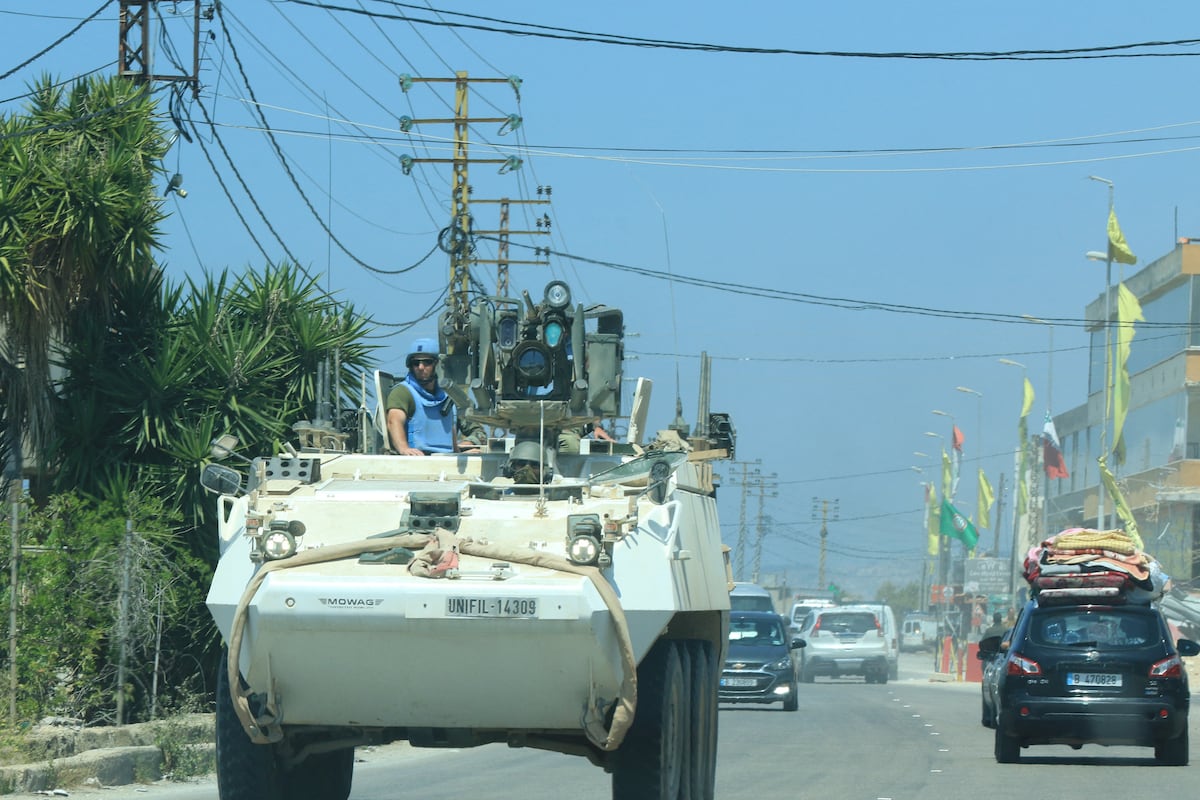
ROME — The mandate of the United Nations Interim Force in Lebanon (UNIFIL) is set to expire at the end of 2026, despite renewed violence in the country that has already claimed the lives of six peacekeepers.
After years of U.S. pressure, the decision was taken by the UN Security Council in August last year through the adoption of Resolution 2790. The decision also tasks the Secretary-General with presenting options by June 1 of this year for the future implementation of the resolutions currently overseen by UNIFIL, most notably Resolution 1701 (2006), which recalls a number of earlier ones.
Following the 2006 war between Israel and the armed group Hezbollah, Resolution 1701 ended the conflict and expanded the mission’s mandate to monitor the cessation of hostilities, ensure humanitarian access for civilians, and support the deployment of the Lebanese Armed Forces in southern Lebanon.
UNIFIL currently fields around 8,500 peacekeepers from nearly 50 troop-contributing countries. Established in 1978 to oversee Israel’s withdrawal from Lebanon and help restore peace and security, the mission operates exclusively on the Lebanese side of the border and also assists the Lebanese government in re-establishing its authority in the area.
The tenets of Resolution 1701 remains central to follow-on arrangements, as its implementation will technically continue beyond UNIFIL’s withdrawal. “This is why the Security Council asked the Secretary General to present options, in June, to implement Resolution 1701 when UNIFIL leaves,” UNIFIL spokesperson Kandice Ardiel told Defense News.
The Security Council has given no indication that it is revisiting the decision of ending the mission in southern Lebanon, and UNIFIL is not involved in the process of developing proposals.
The decision to end the mandate was largely driven by Washington, where leaders have argued the time had come for the Lebanese army to assume greater responsibility without the presence of UN peacekeepers.
Some analysts see the proposition as a contradiction in terms. Largely under-equipped, underfunded and understaffed, the Lebanese Armed Forces (LAF) are in no position either to forcibly disarm Hezbollah, a move that could also trigger internal sectarian strife, or to confront the Israeli military.
As part of the process of winding down the mission, UNIFIL has developed plans for the withdrawal of personnel and the disposal of bases and equipment.
“Based on other cases, facilities could become Lebanese state buildings where the Lebanese Armed Forces could potentially be stationed,” said Chiara Ruffa, professor in political science at the Centre for International Studies (CERI) at Sciences Po Paris. “Ultimately, however, it depends on Israel’s intentions. If the objective is to maintain an occupation, then these sites could be taken over by the Israeli forces.”
As the process remains ongoing, analysts describe potential scenarios. “The UN Security Council could choose to dismantle UNIFIL and assign a greater role to the military Observer Group Lebanon (OGL) which still is a UN-led mission, but much smaller than UNIFIL,” Ruffa explained.
“In any case, Resolution 1701, together with Resolution 1559, is likely to form the backbone of the future configuration in southern Lebanon,” said Raymond Murphy, former UNIFIL peacekeeper and professor at the Irish Centre for Human Rights at University of Galway. Both resolutions call on foreign forces to withdraw from Lebanon and on the disarmament of all armed groups in the country.
According to analysts, the UNIFIL withdrawal will have significant implications for southern Lebanon, particularly in terms of shedding light on potential war crimes, creating humanitarian corridors, and reducing civilian casualties and protection.
Other implications include the loss of coordination mechanisms, in particular the Tripartite series of military meetings organized by UNIFIL and held between 2006 and 2023, which brought together the Israeli and Lebanese armed forces and helped defuse minor tensions along the Blue Line.
UNIFIL’s withdrawal also is expected to have an economic impact on an area already neglected, as it has acted as “a financial lifeline for the area,” said Dina Arakji, a UAE-based analyst at Control Risks and non-resident fellow at the Middle East Institute. The mission has also provided employment opportunities for locals and worked with municipalities.
Overall, the result is a diminished role for the multilateral system and the United Nations in addressing conflicts worldwide, said Ruffa, the political science professor.
“Shutting down the mission suggests that the UN is not important in conflict resolution, which runs counter to the evidence, as research shows that, notwithstanding its limitations, the United Nations does reduce the number of killings and helps protect civilians,” she said.
Agnese Stracquadanio is a Middle East correspondent for Defense News. She has a background in writing and photojournalism, holds a master’s degree in international relations, and previously worked for Reuters.
Read the full article here
